Skill-based matchmaking (SBMM) rates every player on recent results and then builds each lobby from a narrow band of similar skill, which makes a game feel fairer on paper and much less relaxed in practice. The gap between that pitch and the lived experience is why skill based matchmaking is controversial, and it is why the argument comes back every season.
Call of Duty, Warzone, Apex Legends, Fortnite, Destiny 2, Halo and Dead by Daylight all sit somewhere on this debate. Players say casual playlists became a sweat lobby, friend groups cannot play together, and the rating that decides their fate stays hidden. Developers say retention, new-player onboarding and competitive integrity depend on it. Both sides have real points, and the most useful thing an article can do here is stop picking a winner and start explaining the machine.
Updated for 2026. Game features change with every patch, so anything edition-specific below carries a date rather than being stated as evergreen fact.
Table of Contents
- 1What Is Skill-Based Matchmaking?
- 2Why Is Skill-Based Matchmaking So Controversial?
- 3Why skill based matchmaking is controversial in team games
- 4How Does the System Decide Who Matches?
- 5What Problems Do Rating Systems Create?
- 6How Does Matchmaking Affect New and Casual Players?
- 7Can Skill-Based Matchmaking Be Fixed?
- 8Frequently Asked Questions
- 9Why is skill-based matchmaking bad?
- 10Why do games use skill-based matchmaking?
- 11Is skill-based matchmaking bad for casual players?
- 12Why do skill-matched teams still feel unfair?
- 13Is there skill-based matchmaking in Fortnite?
- 14Will Call of Duty ever get rid of skill-based matchmaking?
- 15Conclusion
What Is Skill-Based Matchmaking?
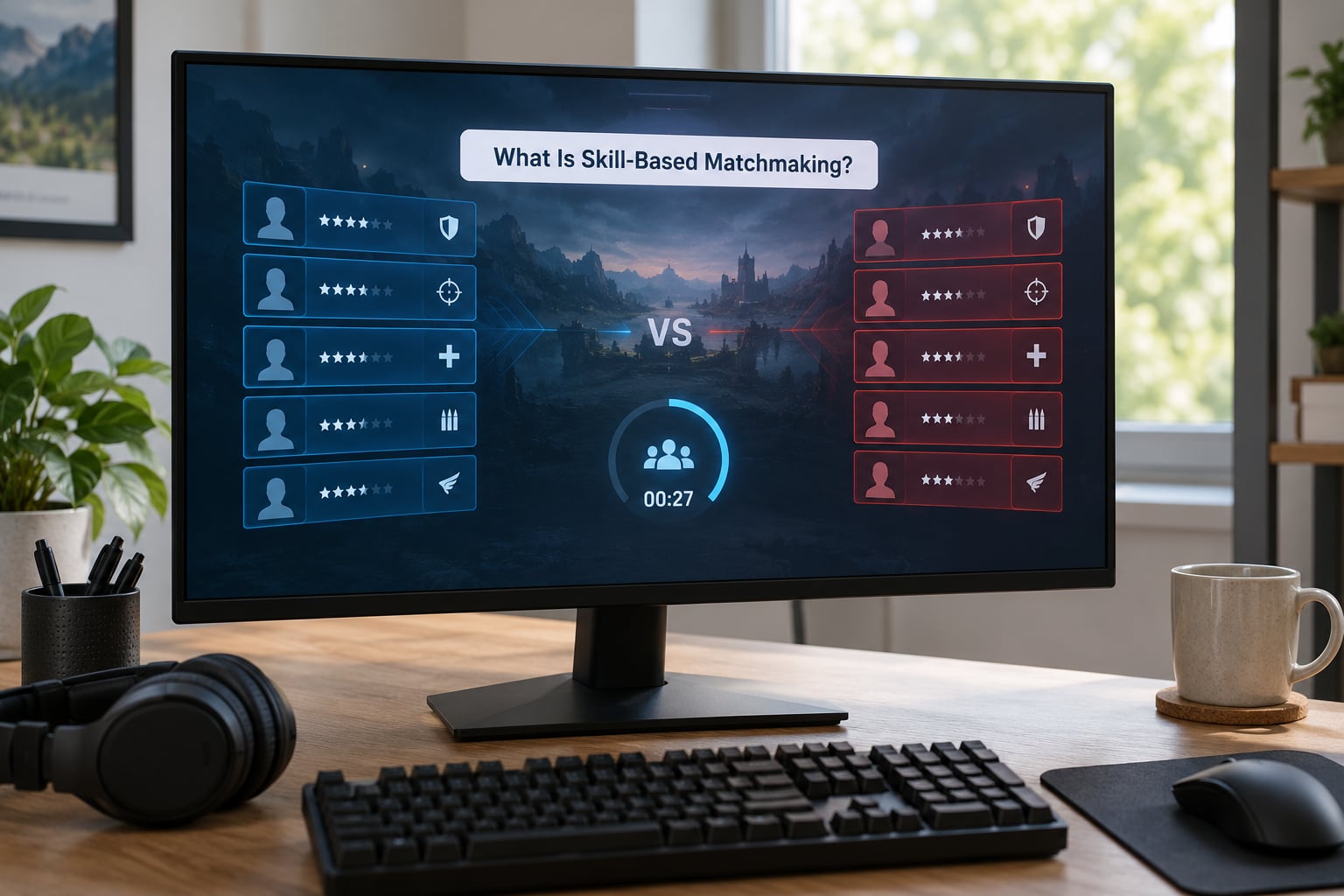
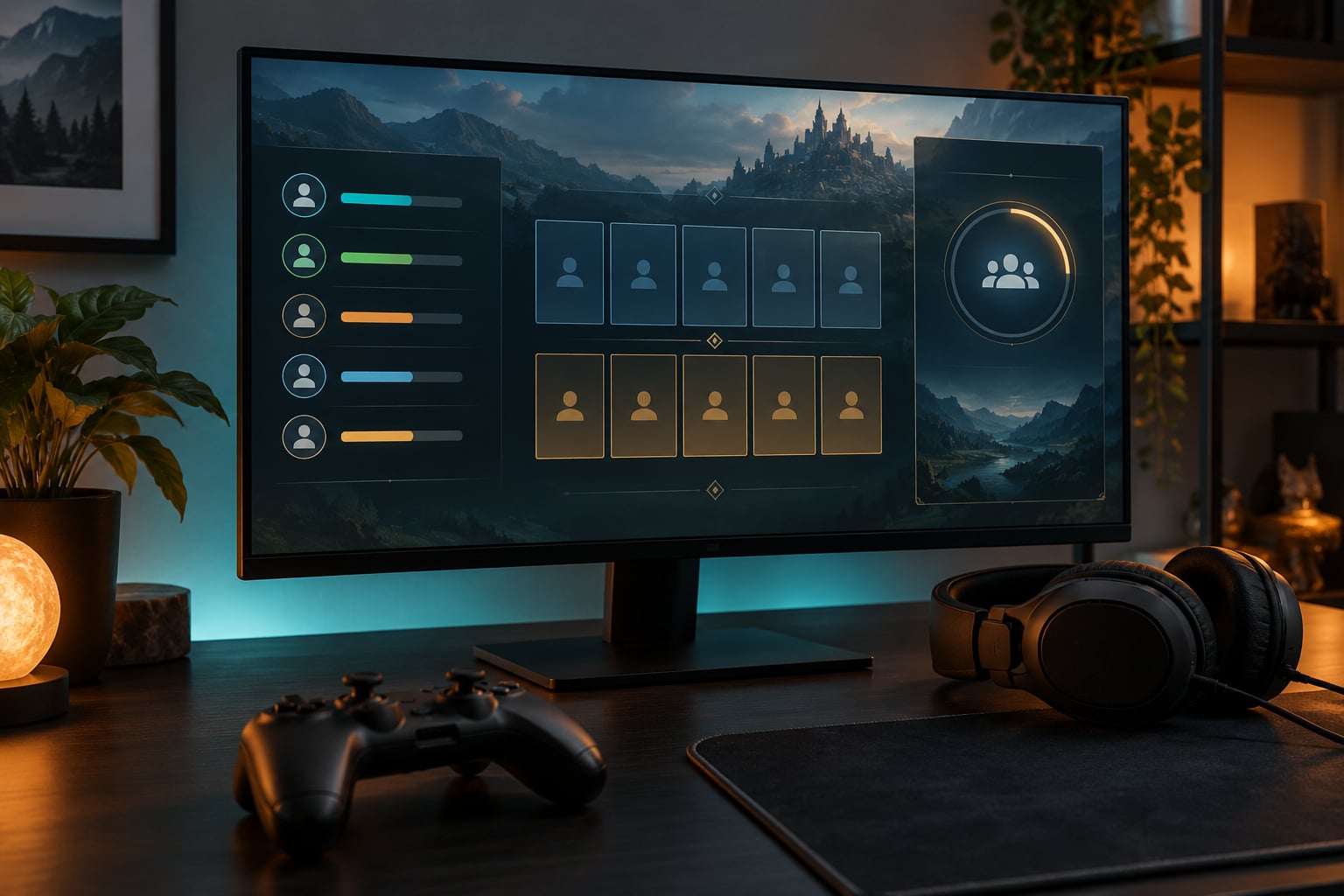
Skill-based matchmaking is a lobby-building system that gives every account a skill rating and only puts players together when their ratings sit close enough. In practice that means a hidden number, usually called MMR (matchmaking rating) or an ELO score, moves up and down with how you play.
Most of these systems watch a mix of signals: win rate, kill-death ratio, score per minute, objective play, and sometimes how you behaved in the last handful of matches rather than over your whole account. The important word there is recent. A rating built mostly on your last five to ten games reacts far faster than a career average, which is the source of a lot of the arguments in this article.
Contrast that with the two systems it replaced or competes with. Random matchmaking drops you into whatever lobby is filling up, so you might face a beginner and a tournament winner in the same hour. Connection-based matchmaking ignores skill almost entirely and optimises for ping, keeping matches on your own server or nearby region, which is the approach Bungie moved toward in Destiny 2.
None of these is a neutral choice. Each one decides what a game feels like: random queues feel loose and unpredictable, connection-based queues feel social but chaotic, and skill-based queues feel tight and relentless.
Why Is Skill-Based Matchmaking So Controversial?
Because the complaints are not really about fairness, they are about intent. Players did not sign up for a ranked ladder on a playlist they chose to be social, and the system does not ask. Here are the arguments that actually come up, gathered from the long-running thread on ResetEra, the Steam and Reddit discussions, and years of player posts.
Why skill based matchmaking is controversial in team games
- The casual playlist stopped being casual. This is the most repeated complaint by a wide margin. A Friday night game that used to be forgiving now has people playing at full effort and calling anyone else a tryhard. Players on Steam and Reddit describe the same Friday-evening scenario in almost identical words: they open a relaxed game and end up sweating through it because the lobby demands it.
- One bad friend ruins the session for everyone else. When a party of mixed skill queues together, the system has to pick a number, and it usually anchors on the strongest member. Players on ResetEra describe it from both sides in one breath: playing with better friends makes your game miserable, playing with worse friends makes theirs miserable.
- Lobbies dissolve after every match. Under SBMM you rarely see the same people twice, so you cannot keep a lobby, build a rivalry, or party up with regulars. One of the most quoted lines in the NeogAF thread was about how the days of finding a lobby you clicked with are gone.
- The highest-skill player drags the whole party. In Apex Legends, players report that their rank is computed from the top member of the squad, so a Predator player can pull three others into brackets they cannot compete in. It is the same mechanic in shooters with premade teams.
- New-player protection overshoots into protection for everyone. Beginners are protected, but so is anyone the system is unsure about, and the effect is that average players get matched well above their level with no explanation of why.
- Team games punish individuals for their teammates. ELO-style ratings update on winning and losing. In a five-stack that a single player cannot carry, the rating reflects the team, not the contribution, which is what produces the ELO hell that frustrated players describe in ranked queues.
- Queue times blow out at the top and off-peak. High-skill brackets have few players, so the system widens its search or sends you across regions. Players report multi-minute waits and, in one Destiny 2 example, opponents from another continent, which is a genuine connection disadvantage and not just a complaint.
- The rating is hidden. In Call of Duty, players cannot see their MMR or see why a match felt off. A player on Steam described rematching on the strength of the last handful of games and wanting nothing more than to see the number move. When the score is invisible, every bad result feels arbitrary.
- Bots fill the pools. In off-peak hours, some lobbies are padded with bots. The matchmaking is behaving exactly as designed, and it is still matchmaking you against something that is not a person.
Now the honest counterpoint, because leaving it out would make this a one-sided piece. A lot of the hostility to SBMM is just the refusal to lose. Pro-side posters on ResetEra make a consistent argument: it is no fun to be completely outclassed either, rolling an evenly matched team is exciting, and stomping beginners is boring. That argument has real weight, and it explains a good chunk of the loudest complaints.
It does not explain all of them, though. The same pro-SBMM posters admit you can smurf, VPN or reverse-boost, which means the system is not actually preventing easy wins. If a player can buy a win without much trouble, then the claim that SBMM exists to stop easy wins falls apart, and the remaining complaints about broken friend sessions and hidden ratings stand on their own.
How Does the System Decide Who Matches?
Every implementation differs, but the pipeline behind skill-based matchmaking is remarkably consistent, and once you see the steps the arguments get much easier to judge.
- Collect match data. Every game produces signals: placement, kills, deaths, damage, objectives, and sometimes behaviour patterns like menu navigation or loadout changes.
- Estimate a rating. The system assigns or updates a hidden skill number, often leaning heavily on recent results rather than a lifetime average.
- Open a search band. It builds an acceptable range around your number and looks for players inside it, with latency and region as hard or soft constraints.
- Fill the lobby. It assembles enough players, applies role and class limits so teams are legal, and deals with premade parties.
- Widen the search over time. If the lobby fills slowly, the range expands, or region constraints loosen. This is the step that produces both the long waits and the cross-continent opponents.
- Update ratings. After the match, the number moves based on result and performance, and often decays over time if you stop playing.
| Factor | Skill-based | Connection-based | Unranked / random |
|---|---|---|---|
| Match fairness | High within a band | Low | Random |
| New-player experience | Protected early, then steep | Can be brutal immediately | Unpredictable |
| Queue time | Rises at high skill and off-peak | Usually short | Usually short |
| Casual friend groups | Often broken by party anchoring | Works well | Works well |
| Smurf exposure | Higher once a smurf has a rating | Constant | Constant |
| Rating visibility | Often hidden | Usually none | Usually none |
Step five explains the queue-time complaints better than any amount of arguing. Skill accuracy and wait time pull against each other, and the pull gets stronger the thinner the pool. A studio facing that tradeoff has to pick a side, and it has picked the same side in almost every live-service shooter.
What Problems Do Rating Systems Create?
Rating systems are estimates, and estimates fail in predictable ways. The same maths that produces a fair lobby also produces the frustration players complain about, which is a large part of why skill based matchmaking is controversial even among people who want competitive games.
Small samples swing hard. A rating weighted toward the last five to ten matches can be built on almost nothing. One hot streak moves you up, one cold streak moves you down, and a player on Steam described being knocked down to earth after a bad run. It feels random because statistically it nearly is.
Win or loss is not contribution. ELO-style updates lean on results. In a team game, results are shared, so a player doing the most work can move down while a teammate who hid in a corner moves up. That mismatch is the mechanical heart of ELO hell.
What counts as skill keeps changing. A new season patch can invalidate weeks of rating data. Meta shifts, new weapons, new maps and balance changes all make old ratings mean less than they did last month.
Protection inflates the middle. New-player onboarding keeps losses away for a while, which is good, but a system tuned to be gentle with everyone has no way to be harsh with anyone. The middle of the ladder drifts upward and the average match gets harder without anyone in it getting better.
Some performance resists measurement. Objective play, support work, trap-setting, positioning and callouts are hard to score with kills and placements, so ratings end up measuring a narrower game than the one being played.
How Does Matchmaking Affect New and Casual Players?
New and casual players take the sharpest end of the trade. The system is designed to protect them and often ends up doing the opposite, because protection and challenge are the same dial.
Placement matches are the intended safety net: a short block of games where the system estimates your level without your rating mattering. When placement works, a beginner spends those games losing to slightly better players and improving. When it does not, they get slotted too high and spend their first month learning that every lobby ends the same way.
Skill decay is the other half. Come back after three months and your rating still says you were good, while your hands and map knowledge do not agree. The bracket does not know you are rusty, so you get punished for taking a break by a system you cannot see.
Completion-driven players get hit too. Challenges that require off-meta play are nearly impossible in a lobby of people optimising, and there is no queue you can select for the mode where nobody is trying.
None of this means casual queues should be exempt from skill awareness. It means the fix is a mode the player chooses, not a rating applied to every mode they open.
Can Skill-Based Matchmaking Be Fixed?
Mostly, yes, and the people who complain about SBMM are not asking for it to disappear. They are asking for it to be one option instead of the default everywhere. These are the changes that would do the most good.
- Keep skill matching in ranked playlists. If you want a tight ladder, queue for one. If you want a social game, open a social playlist with no skill matching. Most of the anger comes from these two intents sharing one queue.
- Let players opt in. A visible toggle for skill matching, remembered per account, costs nothing and gives players control back.
- Make connection the hard constraint and skill the tiebreaker. Bungie moving Destiny 2 toward connection-based matchmaking is the clearest real example. It even produced the reverse complaint: players misread the more open lobbies as worse matchmaking because they were the ones being outplayed that night.
- Fix party logic. Average the party rating instead of anchoring on the strongest player, and let members opt out of being counted at all. This single change would remove the most-repeated complaint in the forums.
- Show the rating. A visible MMR with an explanation of why it moved gives players a way to tell a bad day from a broken system.
- Stop rewarding throwing matches. A rating weighted to recent kill-death ratio can be farmed by feeding. Long-term weighting plus anti-boost detection closes that door.
- Keep the casual pool out of skill search during peak hours. Wider ranges and fewer bots at busy times reduce the wall effect where two easy matches are followed by an esports-level round.
One historical note worth keeping in mind: this is not a new fight. SOCOM on PlayStation 2 had both ranked and open mixed-rank servers, and Halo 2 used skill-based lobbies under rules that would be instantly familiar today. The controversy is not that studios discovered skill matching. It is that they stopped offering a choice.
Frequently Asked Questions
Why is skill-based matchmaking bad?
The most common answer is that it applies a ranked rating to every playlist, including social ones, and hides the rating that decides it. That produces stiff lobbies in casual games, party members anchored to the strongest player, and long queue times at high skill. The counter-argument is that skill matching makes games fairer for everyone.
Why do games use skill-based matchmaking?
Studios use it to keep matches competitive, to give new players an onboarding buffer instead of an instant loss streak, and to lift retention in live-service games where a fair-feeling match is more likely to be replayed. It also lowers the number of people who leave after a bad first session. Those business reasons survive the backlash, which is why it keeps shipping.
Is skill-based matchmaking bad for casual players?
It is, when it is the only option. Casual players who want to socialise end up playing at full effort because the lobby demands it, and partying with friends of mixed skill usually means someone gets carried or carries. A separate social playlist with no skill matching would fix most of this without touching ranked.
Why do skill-matched teams still feel unfair?
Because the system rates results, not contribution. ELO-style updates move on winning and losing, which in a team game are shared outcomes. A strong player on a weak team can lose rating while a teammate who played safe gains none. Add role imbalance and a single smurf, and a perfectly skill-matched lobby still feels broken.
Is there skill-based matchmaking in Fortnite?
Yes, broadly. Epic introduced skill-based matchmaking alongside bots in September 2019, with separate open and cross-play options. The long-running complaint is about the open playlists feeling like ranked during busy hours. Details shift season to season, so check current patch notes before treating any specific mode setting as fixed.
Will Call of Duty ever get rid of skill-based matchmaking?
Unlikely across the whole franchise, and the history suggests loosening rather than removal. Call of Duty has alternated between stricter and looser skill matching across releases, and casual and ranked modes now run separately. Expect continued tuning of ranges and visibility, with the occasional season where the system feels much tighter than the one before it.
Conclusion
If the system annoys you, do one thing first: find out which queue you are actually in. Open a social or casual playlist with no skill ranking and play with your friends there, then treat ranked as the place you go when you want a tight game.
The argument is not really about whether skill matching is good. It is about whether a hidden system should decide what kind of game you get to play. Players who understand why skill based matchmaking is controversial can at least predict how it will behave in any given playlist. Give everyone a visible rating, a real choice of playlists, and party logic that averages instead of anchors, and most of the anger in this thread disappears.