Ranked anxiety is the fear, dread and physical tension that shows up when you queue for competitive play, usually because the result is measured in public and can be lost. It fades with repeated exposure, a short routine before you queue and goals you actually control. Here is how to deal with ranked anxiety without waiting for confidence to turn up first.
The feeling is physical. Your heart picks up before the queue even pops, your hands feel unsteady in the first round, and a single teammate comment sits in your head for hours. Players on Reddit and game forums describe the same pattern almost word for word, which is how you know it is common and not a personal defect.
It also hides. The clearest sign is not the nerves, it is avoidance: your hours stay the same while your ranked games quietly drop from a dozen a week to one a month. Nothing about that pattern improves your rank, because the practice you skip is the practice under pressure.
What follows is a habit protocol, not a pep talk. It takes weeks rather than days, works across shooters, MOBAs and sports games, and asks for no purchases. Updated for 2026.
Table of Contents
- 1What You Need
- 2Step-by-Step: How to Deal with Ranked Anxiety in Six Moves
- 31. Set a goal that does not depend on winning
- 42. Prepare your body and environment before queuing
- 53. Separate the match from your self-worth
- 64. Use a focus cue when pressure spikes
- 75. Review mistakes without replaying the whole match
- 86. Take a planned break when anxiety keeps rising
- 9Common Mistakes
- 10Frequently Asked Questions
- 11How long does it take to stop feeling anxious about ranked?
- 12Do I need to play ranked matches to actually improve?
- 13What should I do in the first minute after a loss?
- 14How do I handle toxic teammates?
- 15How often should I play ranked to get over the fear?
- 16When should I step back from ranked or talk to someone?
- 17Conclusion
What You Need
Five things, and none of them expensive. Beginners can set all of them up in an evening; experienced players usually just need to write them down.
- A session cap you decided on before you started. Pick a number of games and a wall-clock limit, write them on paper, and stop there. A cap decided while you are losing is a decision you will not like making.
- A setup and a time of day that are not negotiable. Quiet room, stable connection, notifications off. Off-peak hours usually mean fewer players who want to type, which matters more than you expect.
- Working knowledge of the mode. Know what the objective is, how rank moves, how LP or rating gain works, and how many placements a season starts with. Uncertainty about the rules gets read as a threat.
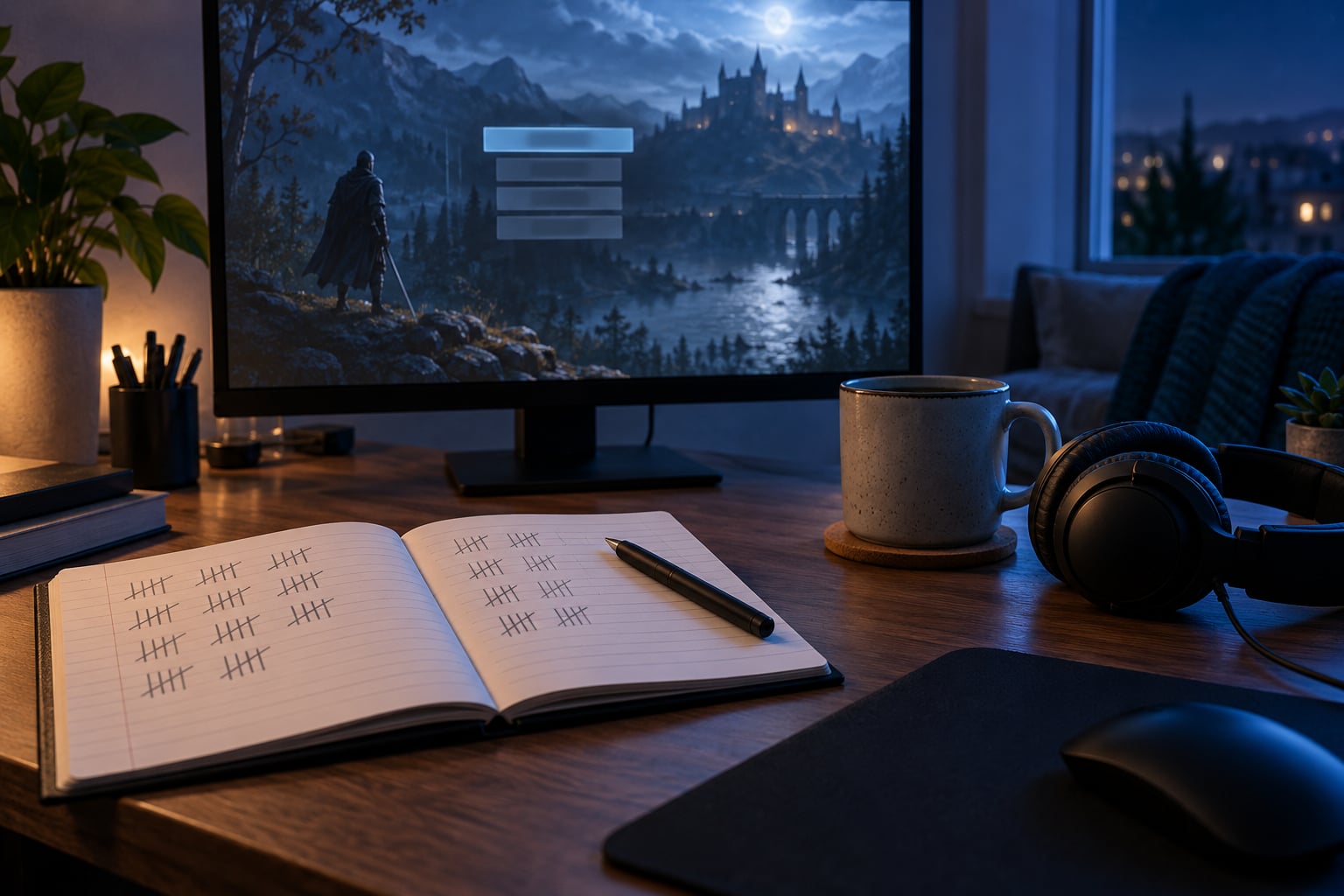
- One way to track games. A note, a spreadsheet, a line in a journal. One character per game, win or loss, plus the process goal you picked. Reviewers who track results consistently report less spiralling than those who rely on memory.
- A short post-match routine. Five minutes of factual review, then done. No full VOD rewatch unless you planned it in advance.
Skip anything that needs a new headset or a better chair. Gear helps comfort, and comfort helps, but it is not what you are solving this week.
Step-by-Step: How to Deal with Ranked Anxiety in Six Moves
Work through these in order. Each one only makes sense on top of the one before it, because the first two remove the pressure and the rest teach you to stay steady inside it.
1. Set a goal that does not depend on winning
A win is decided by nine other people plus the matchmaking system. A process goal is yours alone, which is why it is the right one. Pick one per session: keep crosshair or aim placement on target, call a rotate once every round, review the minimap before every fight, or simply play the full match without quitting early.
The success test happens at the end: did you do the thing you said you would. When you measure that way, a bad loss stops being proof you are bad and becomes one sample out of a session. Players who report the fastest change almost always say the same thing, they moved from “win the game” to “do my one thing”.
2. Prepare your body and environment before queuing
Give yourself three to five minutes before the queue button, every time, in the same order. Check the connection and close anything that will steal attention. Read the current objective or the map you are playing, because starting without that information is what makes the first five minutes feel loud.
Then use the 3-3-3 breathing rule: three breaths in, three held, three out, repeated a few times. It takes under a minute and it works because the long exhale slows the heart rate rather than fighting it. Finish with a warm-up, ten minutes in the practice range or a bot match, and stop while you still feel sharp. Warmed-up players on forums almost always describe the shift into a calm state as the thing that made queueing possible.
Keep the routine identical every session. A familiar sequence tells your nervous system the pressure is coming and that it has ended before.
3. Separate the match from your self-worth
Ranked is the only mode where your performance is scored and displayed, so your brain reads it as a performance test with an audience. That is why a single result lands so hard. The feeling is not irrational, it is just misfiled: it treats a rating change as a verdict on your ability.
Reframe the language instead of arguing with the feeling. Say “that round was bad”, never “I am bad”. Look at the numbers honestly while you are still calm: even strong players sit near a 45 to 55 percent win rate, so losses are the normal half of the distribution, and one demotion says almost nothing about where you belong. Placement matches at the start of a season are the clearest example, they are a sorting mechanism, not a measurement of you.
4. Use a focus cue when pressure spikes
Pressure arrives mid-match, not before it, and it arrives as narrow attention: you start seeing one lane, one enemy or one mistake. Pick one cue and use it every time, so the switch becomes automatic.
In a shooter that cue is often the minimap plus one long breath. In a MOBA or a team game, a short reset phrase works better, something like “next objective” spoken out loud, which pulls your eyes back to the map and off the chat window. The rule is the same in solo and team play: return to the next decision. You cannot fix the round that just happened, and looking at it is the fastest way to lose the next one.
5. Review mistakes without replaying the whole match
Give the review five minutes and one job. Write a single factual line about something you control, crosshair too low in the third fight, or no early warning before an objective push. That is the adjustment for next session.
Stop there. Productive review is short, factual and forward-facing. The version to avoid is the one where you rewatch from the first second, hunt for the moment it was lost, argue with a teammate in chat, or check the rank and scoreboard afterwards. That loop feels productive and makes the next queue heavier, which is why plenty of players blame the game for feelings that started after twenty minutes of review.
6. Take a planned break when anxiety keeps rising
Distinguish useful challenge from real overwhelm. Useful challenge is uncomfortable during the match and fine an hour later. Overwhelm shows up outside the game: replaying losses at midnight, snapping at people who had nothing to do with it, dreading the moment you open the client, or dreading it again the next day.
Short break, then return smaller. End the session, do something physical for ten minutes, and come back for two games instead of five. A planned break is part of the protocol, not a failure of it, because the alternative is grinding through and teaching yourself that ranked costs more than it gives.
If the pressure follows you into sleep or work, taking fewer ranked games is the right move and talking to someone about it is a better one. General gaming habits handle nerves around a game. Persistent anxiety that shapes your day is a bigger subject, and a doctor or mental health professional can help far more than any queue tip here.
Common Mistakes
Most players do not fail because they care too much about rank. They fail because of habits that make each match heavier than the last.
- Queuing while already distressed. Angry, sleep-deprived or still arguing about the last game. Fix: a fifteen-minute minimum gap between sessions, and never queue straight out of another competitive game.
- Chasing a specific rank by a specific date. A deadline turns every game into a test. Fix: drop the number entirely for a month and track only games played and your process goal.
- Blaming teammates out loud or in chat. It confirms the worst thought you already had about that match. Fix: mute all, unmute only someone who is genuinely useful, report abuse later.
- Playing on poor sleep. A tired brain reads normal adversity as a crisis. Fix: if you got four hours, play unranked or stop.
- Turning every result into an identity judgment. One loss becomes “I am trash”, then the next queue carries that verdict into it. Fix: use the factual sentence from step five and nothing more personal.
- Replaying losses instead of learning. Fix: five-minute review, one line, then a different activity.
Three habits that pay off fastest. Mute before you queue, not after someone starts typing. Decide the session end before the session starts. Write your games down, because memory is biased toward the losses that upset you.
And if you are starting from avoidance, the version that works for a lot of players is removing the escape hatch entirely, no casual queue available during the session. Fewer options, one decision, and the fear has less room to negotiate.
Frequently Asked Questions
How long does it take to stop feeling anxious about ranked?
Most players notice the physical nerves fade over four to eight weeks of consistent sessions, while the dread takes longer because it feeds on avoidance. Anyone who stops queuing for a month tends to feel it again on return. Progress is easier to measure than to feel: track games per week and how often you nearly quit, instead of rating your mood after every match.
Do I need to play ranked matches to actually improve?
Ranked is where improvement shows up, but it is not the only place skill grows. Bot matches, aim drills and deathmatches train mechanics cheaply and with no stakes. Ranked adds realistic pressure, and pressure is the thing your nerves need exposure to. Keep the sessions you enjoy for learning, then use ranked a few times a week as deliberate pressure practice.
What should I do in the first minute after a loss?
Stand up, breathe out longer than you breathe in, and say one factual sentence about the match, such as noting you stopped checking corners in round four. Do not open the scoreboard or chat. Queue again only if you planned to and feel steady, otherwise close the client. The whole reset takes under a minute and works better than rewatching the loss.
How do I handle toxic teammates?
Mute first, react second. Mute all before you queue and unmute only someone who is useful rather than loud. When a teammate starts flaming, repeat one line to yourself, their behaviour is not a prediction of my match, then look at the minimap instead of the chat window. Report abuse afterwards, then step away from voice for the rest of the session.
How often should I play ranked to get over the fear?
Three to five short sessions a week beats one long session, because calm comes from repeated short exposures rather than one hard push. Stop each session at your written cap even while winning, which is what teaches your brain that leaving is not the only exit. If a session leaves you angry or replaying losses at midnight, halve the next one instead of skipping it.
When should I step back from ranked or talk to someone?
Treat the routines here as general gaming habits, not mental health advice or treatment. Seek support if the dread keeps you from playing, follows you into sleep or work, or comes with panic symptoms, since a doctor or mental health professional can help more than any queue tip. Reducing or stopping ranked for a season is a legitimate plan, not a failure.
Conclusion
Start with three things this week. Pick one process goal you can measure without winning, write your session cap down before you play, and run the same three-minute pre-queue routine every time. Then play one low-stakes match where your only job is making the decisions in front of you.
That is the whole method. The nerves do not disappear because you convinced yourself to care less, they fade because you kept showing up in small, controlled amounts and left on schedule. Getting good at handling pressure is a skill you train like any other, and it takes as many games as anything else you have learned in this genre.