Cosmetic only monetization is a revenue model in which a free-to-play game sells items that change how a player looks but never change how they play, so spending buys expression and identity rather than power. About 5% of players pay, their money funds the art team and the live-service content pipeline, and everyone else keeps the same combat power they started with. That is the whole trade in one line, and the rest of this guide unpacks how the money actually moves, what studios can sell, and what you should check before you buy.
Table of Contents
- 1What Is Cosmetic Only Monetization?
- 2How Cosmetic Only Monetization Works
- 3Where Does the Money Come From?
- 4What Can Developers Sell as Cosmetics?
- 5How Do Prices, Bundles, and Limited Offers Work?
- 6How Does the Storefront Deliver Purchased Items?
- 7How Can Cosmetic Monetization Stay Fair?
- 8Why Do Some Players Dislike Cosmetic Purchases?
- 9What Should Players Look For in a Cosmetic Store?
- 10Frequently Asked Questions
- 11Does cosmetic only monetization give an advantage in gameplay?
- 12Are free skins and cosmetic items really obtainable without paying?
- 13Are randomized cosmetic items the same as loot boxes?
- 14Can I get a refund for a cosmetic item I bought?
- 15What protections exist for minors buying game cosmetics?
- 16Conclusion: Start With Fairness and Transparency
What Is Cosmetic Only Monetization?
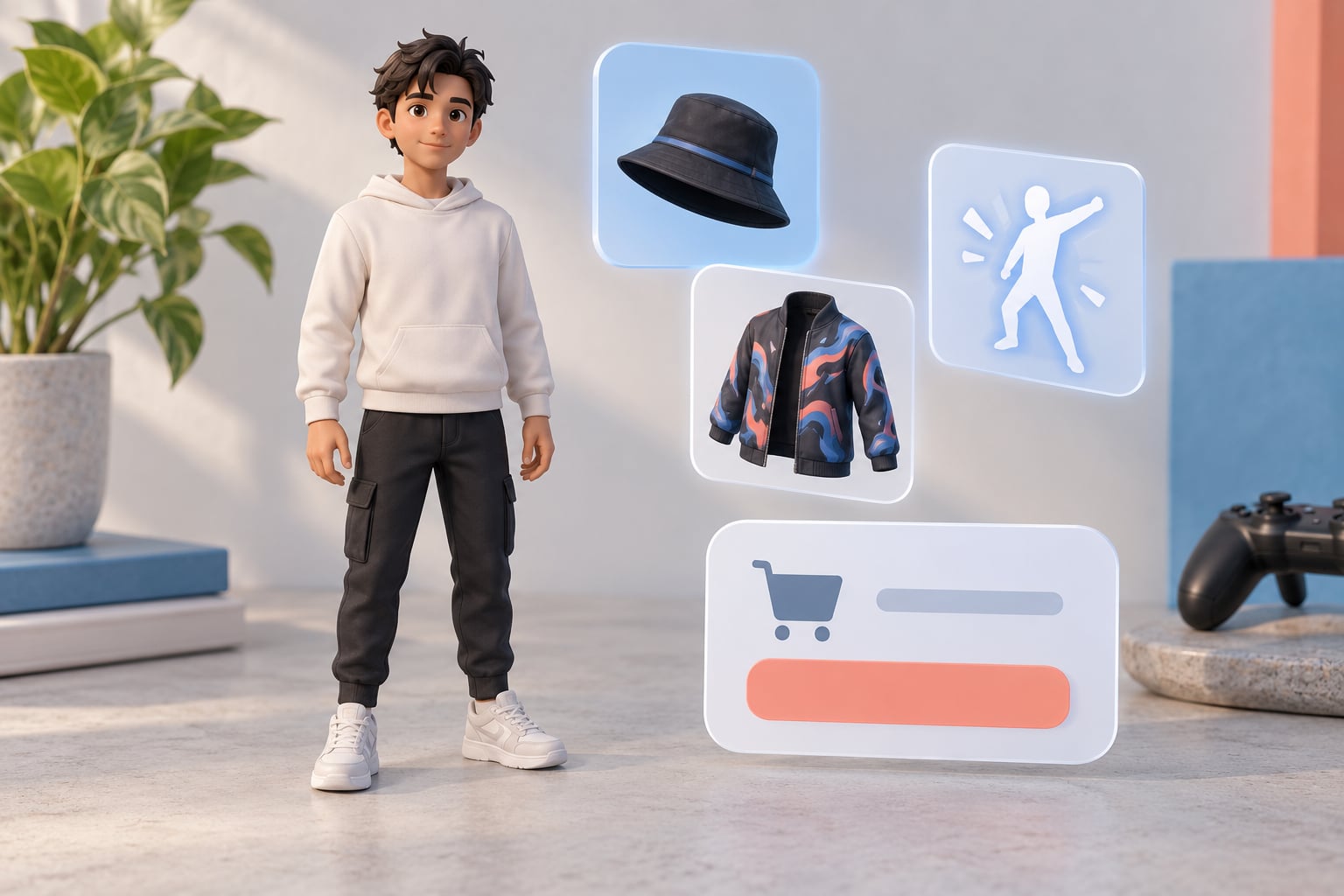
Cosmetic only monetization means every purchasable item is purely visual. A character skin, a weapon wrap, an emote, a spray, a profile frame or a colour palette changes what other players see, and nothing else. No health, no damage, no faster unlocking, no extra loadout slot, no queue priority.
That last part is where the definition actually lives, because plenty of games describe a store as cosmetic and then sell something that quietly bends the rules. A shorter queue is a convenience, a faster unlock is progress, and an item that makes your character harder to read during a firefight is a functional advantage dressed as art. The model only holds if every buyer and every non-buyer can win the same fight with the same gear.
Cosmetics reach players through four mechanisms, and most games use a mix:
- Direct store purchase. You open the storefront, pick an item, pay, and own it outright. League of Legends skins and Overwatch cosmetics work this way.
- Battle or season pass. You buy one tier, then unlock items along a track as you play. The pass costs money, the items are cosmetic, and a returning player usually has to level quickly to finish one they already paid for.
- Earnable grind. The same item is purchasable, but also droppable through normal play or earnable with an in-game currency you cannot buy outright. This is the free path, and it is the one that keeps the model defensible.
- Randomized cosmetics. You buy a box, a draw or a gacha pull rather than a named item. Every reward is cosmetic, which is why this mechanism sits closest to the line.
| Monetization model | What you buy | Effect on gameplay | Typical player reaction |
|---|---|---|---|
| Cosmetic only | Skins, wraps, emotes, sprays, frames, dyes | None. Everyone plays with identical stats | Widely accepted when a free path exists |
| Pay to progress | Character unlocks, faster levelling, resource packs | Shortens time to a chosen character or upgrade | Mixed, and resented in competitive titles |
| Pay for convenience | Extra loadout slots, queue priority, faster crafting | Saves time without raising power ceiling | Contested; often called pay-to-win in disguise |
| Pay to win | Stat boosts, damage upgrades, stronger characters | Directly raises combat power | Rejected outright in competitive games |
How Cosmetic Only Monetization Works
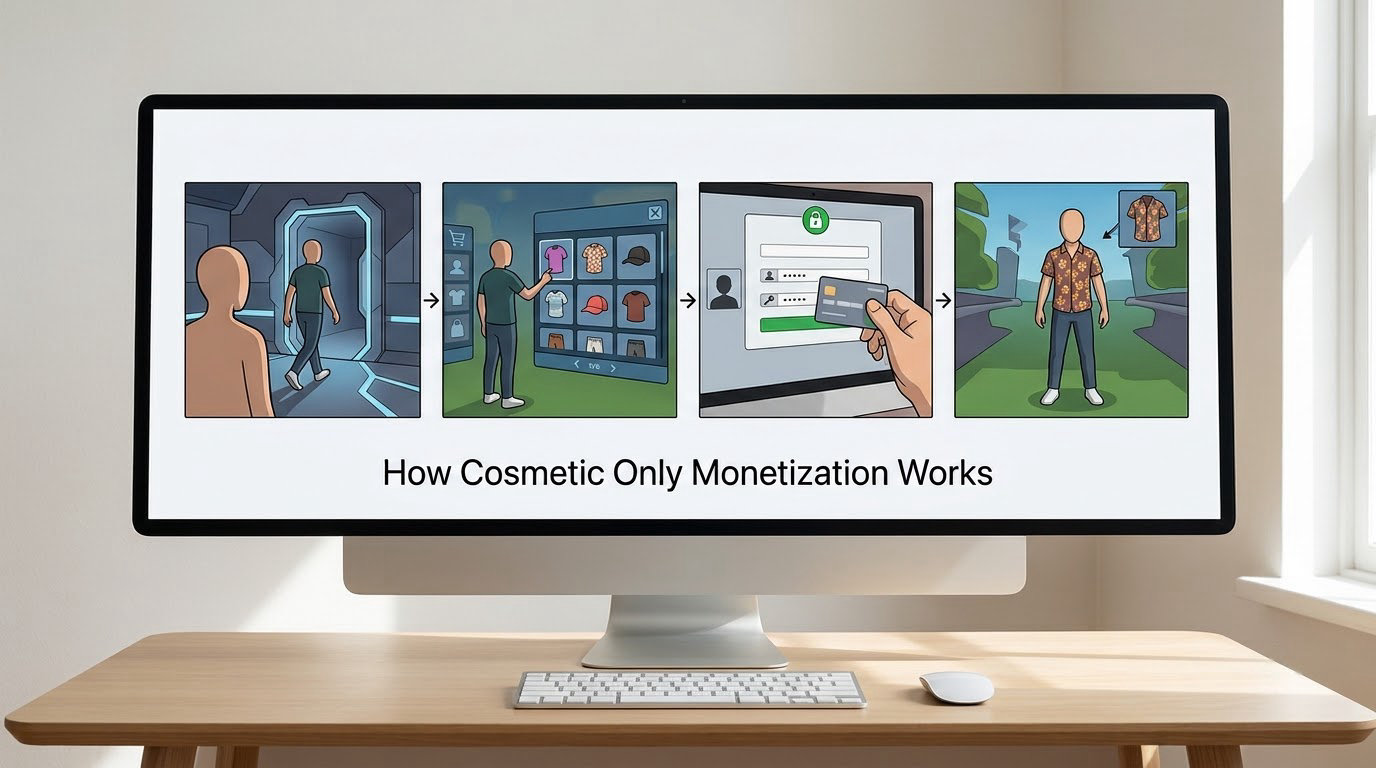
It starts with an art brief, not a purchase button. Someone decides the next release needs a themed collection, an artist paints the concept, modellers rebuild the mesh and textures, engineers add it to the catalogue, and a designer sets the price tier. Only then does it reach a player, and by then the item already exists whether or not anyone buys it.
On the player side the flow is short. You are in a free-to-play multiplayer shooter, you earn a premium currency called credits through play or buy a credit pack, you spend credits in the store, and the item appears in your inventory the same second the transaction clears. Some stores sell the real-world price directly, some hide it behind a currency layer, and mobile stores on the Apple App Store and Google Play usually force the currency layer because of their own billing rules.
The hard part for the developer is keeping the promise as the game ages. New teams arrive, budgets shift, and a cosmetic-only rule is a self-imposed constraint rather than a legal one. Any stat item added later converts the whole storefront into a pay-to-win argument, which is why long-running games publish their own rules on what stays out of the store.
Where Does the Money Come From?
When a store shows a price, the developer receives a share rather than the full number. The rest is split between the platform’s cut, payment processing, taxes where the buyer lives, and sometimes third-party licensing. A collab skin built around a licensed character adds another layer, because part of what you pay covers rights the studio had to buy first. Exact rates change by platform, region and agreement, so treat any single figure as an example rather than a promise.
The wider model rests on acquisition math. A free-to-play game spends somewhere in the region of two to four dollars per player on advertising before that player ever opens the store. A small share, commonly cited around 5%, converts into a paying player, and the spending is concentrated heavily in a much smaller group of heavy spenders.
That concentration is the part players never see. The handful of accounts that buy a collaboration skin on release day effectively cover the marketing cost for the other ninety-five percent, and the non-payers still get the free game, the regular updates and the new maps. Remove the cosmetics and a studio usually replaces them with something players like less, such as stat sales, energy timers or forced advertising.
Cosmetics also carry unusual economics. A new skin is mostly sunk art cost once it is finished, but it can be sold for years and often returns in a rerun. Weapon wraps and sprays are cheaper to produce than character models and can carry a similar price, which is why you see a store with dozens of them around three or four hero skins.
What Can Developers Sell as Cosmetics?
The catalogue divides into a few families, and each behaves differently. Character skins are the flagship and the most expensive to build, because every angle, animation and finisher has to be authored. Weapon wraps and gun finishes are the volume seller, cheaper to make and visible in every firefight. Emotes and poses are pure expression with almost no art cost, which makes them a good value anchor inside a bundle.
Then there are sprays and decals, profile frames and avatars, lobby effects such as kill banners and spawn animations, and colour palettes that reskin an existing item. Cosmetic-only conveniences sit in a greyer zone: a double-sided weapon skin, a larger emote wheel, or a pose that can be cancelled faster than the default. Each one is defensible in isolation, and each one removes a small constraint, so they need real testing rather than a marketing label.
Rarity is presentation, not power. Epic, legendary and mythic labels change nothing about the numbers on the character. Audio is the subtle one, because a distinct footstep or reload sound can genuinely help a player locate a target, which is why sound design usually changes very little between tiers in competitive games.
Players also call them skins because the metaphor has been in games since early console shooters, when character models were called skins and modders swapped the textures wholesale. The word stuck, and it now covers far more than textures.
How Do Prices, Bundles, and Limited Offers Work?
Pricing is a menu of trade-offs, and the same item can sit in several rows of it:
| Offer type | How it works | What the player gives up |
|---|---|---|
| Free or earnable | Earned through play, progression or an unlock token | Time, sometimes a lot of it |
| Low-priced | A small top-up or a single item from a recurring set | Very little, but the item is usually minor |
| Premium direct purchase | A hero skin or bundle bought outright | The largest single sum in the store |
| Randomized | A box, draw or gacha pull with cosmetic-only prizes | Choice of item, plus real odds |
| Subscription | A monthly credit allowance or a monthly pass | Recurring commitment, often after one good month |
| Bundle | Several items discounted against buying them separately | Items you may never use |
Perceived value does a lot of the work here. A bundle is priced to look like a discount, and the surprise is how often you end up with two sprays you never use to justify a skin you did want. Regional pricing adjusts the number to local purchasing power, so the same skin can cost very different sums in different markets, and that gap is exactly what players compare when they call a price unfair.
Scarcity is the sharpest tool and the easiest to misuse. A limited-time item, a rotating storefront or a pass that expires pushes people to decide in a day rather than a week. Genuinely limited items are fine, because they create real scarcity. Manufactured scarcity, where the same bundle returns every three weeks, teaches players to wait, and once they wait, the pressure stops working.
Dark patterns sit one step further on: a countdown that resets when you close the store, a fake discount against a price never charged, or a checkout flow that quietly defaults the highest tier. As of 2026, the major app stores require disclosures for randomized items, and several regulators have pushed on the same point, so the rules are tightening rather than loosening.
How Does the Storefront Deliver Purchased Items?
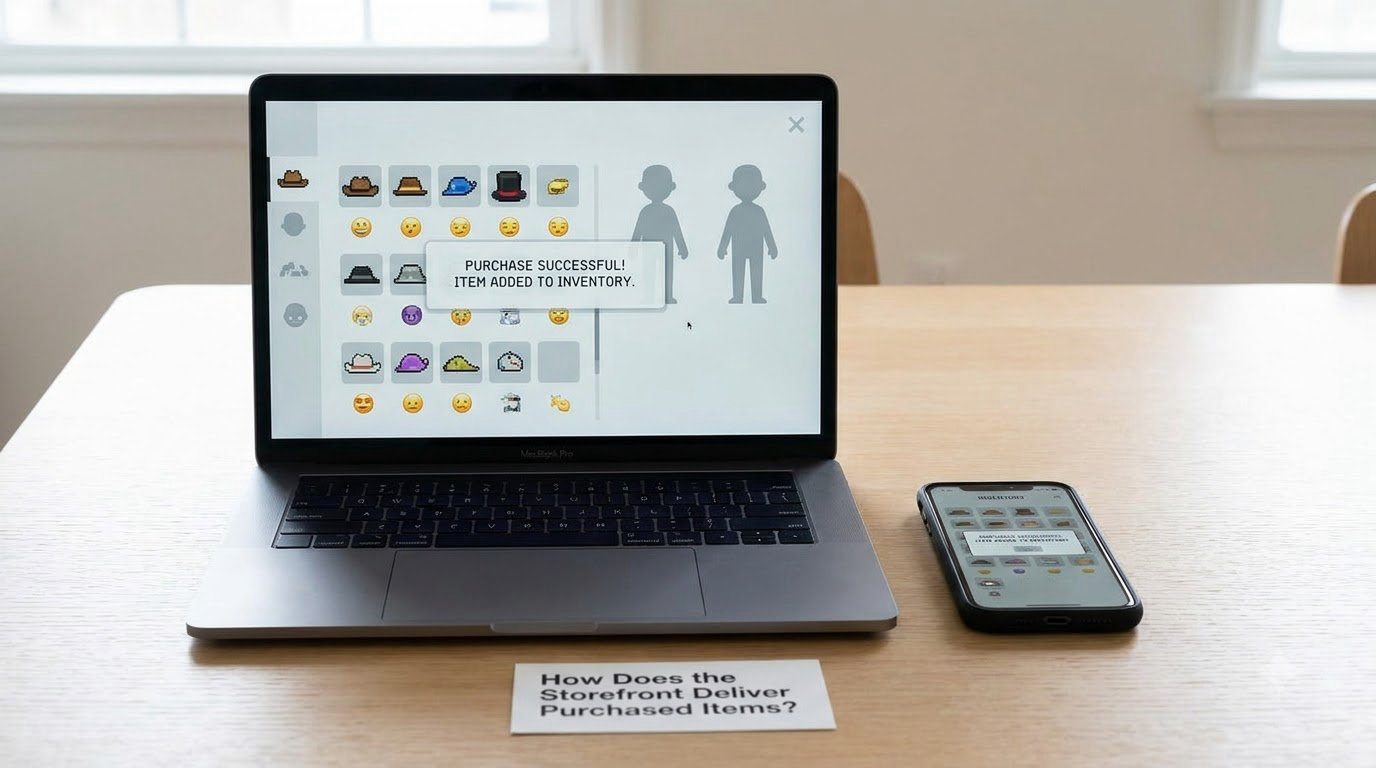
A purchase usually passes through four checkpoints. First the payment, either an in-game wallet, a platform balance on the Apple App Store or Google Play, or a card through the game’s own storefront. Then the transaction returns a confirmation, the account receives an entitlement, and the item lands in inventory.
That fourth step is where things go wrong. If the entitlement arrives and the inventory does not, the item usually shows up after a relog or a support ticket, and on console this sometimes means the purchase is tied to the platform account rather than the game account. Players who later change accounts, lose access to the old one, or move between a console and a PC version can find that a purchase does not follow them.
Refunds follow the platform’s rules rather than the developer’s preference, and a digital item is generally easier to argue about than a physical one. Buying directly on a platform where the purchase sits in your account history is the simplest path to a successful claim, which is a real practical difference between stores.
How Can Cosmetic Monetization Stay Fair?
Fairness in a cosmetic store comes down to a handful of commitments that players can check. Every purchasable item affects appearance and nothing else, with no hidden stat, timer or unlock shortcut. Every item is obtainable free through play, even if the grind is long, and if the grind is unreasonably long that promise is worth nothing. Odds are readable, so a randomizer states its real chances per tier and repeats them in the same place in the interface.
Labels have to be honest too. A discount is a discount against a price the store actually charges, a limited item is genuinely limited, and a cosmetic-only claim still holds several years after it was made. Spending limits, purchase confirmation for large sums, and parent controls that can lock in-app purchases entirely are what keep the model adult-run rather than accidental.
On the developer side, the discipline is to fund the art team honestly. Cosmetics pay for the next batch of cosmetics, the new map, the balance pass and the servers. Studios that keep the promise keep player trust, and that trust is the asset the model runs on.
Why Do Some Players Dislike Cosmetic Purchases?
Most of the complaint is not about cosmetics themselves. It is about how they are presented, and about the gap between how fair the model sounds and how it feels in the moment of paying.
Visibility is the quiet one. In a third-person game your own character sits in the bottom corner of the screen, and in a first-person game you never see yourself at all, so an expensive skin can be invisible to the person who bought it. Players describe this on the Overwatch forums as the reason monetised skins feel pointless, and the fair criticism is aimed at the camera, not the artwork.
The grind alternative is the next one. When the free path takes hundreds of hours, players read it as a paywall with extra steps, and they are usually more forgiving about a long grind for cosmetics than about a shortcut sold for money in the same game. Forums also keep returning to price escalation, where the same quality tier moves upward across a few releases, and to FOMO mechanics like expiring passes and rotating storefronts.
Randomized cosmetics bother people even when every prize is harmless, because the purchase is for the box rather than the item. Then there is social pressure, where a skin that makes you look out of place in a lobby is a small daily cost, and the double-dipping argument, which is hard to dismiss when a game already charges for access and then sells you appearances on top.
What Should Players Look For in a Cosmetic Store?
Before you buy, run this check:
- What does the item actually do? Read the description for words like faster, boost, extra, unlock earlier or bonus. If any of them appear, it is not cosmetic.
- Is there a free path? Check whether the item drops in normal play, and how many hours that realistically takes.
- Who owns it? Find out whether it is tied to your game account or your platform account, and whether it survives a platform change.
- What are the refund terms? A purchase made through a store you already have an account with is far easier to dispute.
- What are the odds? If the item is random, the published chances should sit next to the buy button, not buried in a help article.
- What does your region pay? Compare with what the same item costs elsewhere before deciding the price is unreasonable.
- Can spending limits help? On mobile, check whether parental controls and purchase confirmations are set before the shop, not after.
- Will you ever see it? If the camera never shows it and other players rarely notice, the price is buying very little.
Frequently Asked Questions
Does cosmetic only monetization give an advantage in gameplay?
No. That is the entire definition of the model: every purchasable item changes appearance and nothing else, so no player starts a match with more health, damage or options than another. The advantage players worry about is a different model, such as a stat boost, a faster unlock or a queue shortcut, sold from the same store. Check the item description and store rules each update, because a cosmetic-only claim is self-imposed and can be quietly broken later.
Are free skins and cosmetic items really obtainable without paying?
In a properly run cosmetic-only game, yes. Items usually drop through normal play, complete challenges, or sit behind an earnable in-game currency that cannot be bought outright. The catch is speed. A free path that takes hundreds of hours is technically free and practically a paywall, so the useful question is not whether the item is obtainable but how long it takes and whether the grind competes with the actual game.
Are randomized cosmetic items the same as loot boxes?
Often yes, since a box of unrevealed cosmetic rewards is the same mechanic under a friendlier name. Both may be restricted by regional rules that require probability disclosure, and both are sold against a hidden average. The meaningful difference is transparency rather than the label: a randomizer that publishes its per-tier odds, offers a direct purchase of the item you actually wanted, and lets you see duplicate protection rules is easier to defend than one that hides all three.
Can I get a refund for a cosmetic item I bought?
Sometimes, and the platform usually decides rather than the developer. Purchases made through the Apple App Store or Google Play go through that store’s refund process, and purchases made inside a game on console or PC follow the platform’s own policy. Digital items are hard to refund once rewards are used, so buy through a store where you already hold an account, keep the confirmation, and report the problem quickly if the item never reached your inventory.
What protections exist for minors buying game cosmetics?
Most of them are platform-level. The Apple App Store and Google Play both provide purchase restrictions that can require a password or approval for every in-app transaction, and both let a parent disable in-app purchases entirely. Console stores offer similar controls. Games can add their own limits, such as spending caps or confirmation dialogs above a threshold, and these are worth setting up before the shop is ever opened rather than after a problem.
Conclusion: Start With Fairness and Transparency
Cosmetic only monetization works by selling appearance at scale: a small share of players fund the art, servers and updates for everyone else, and the competitive layer stays untouched because nothing purchasable changes how a match is won. It is a defensible model, and it is not a guarantee, since the promise lives in the store rules rather than anywhere harder.
So check the item description for anything that touches power or progress, confirm there is a free path and roughly how long it takes, look at the odds before any randomized purchase, and find out whether the item follows your account to another platform. Then set the spending controls. A store that answers all of those questions clearly is doing the model properly.