A raid leader coordinates a group of players before, during, and after an encounter: they learn the fight, write and assign the strategy, call mechanics live, delegate responsibilities, and turn each wipe into specific feedback. If you want to know how to be a good raid leader, the honest answer is that the job is mostly communication and preparation, not personal mechanical skill.
The hard part is not learning the boss. The hard part is holding twenty different people to one plan while staying calm when it fails, and then talking to them about it in a way that makes them want to pull again. None of that takes a hero performance. It takes a repeatable process, clear expectations, and the willingness to say “that did not work” out loud without saying “you are bad.”
Most first-time leads can hold a raid together for about two hours. That is fine as a start, but it is not a ceiling. Below is the process I would hand a new lead, roughly in the order they need it on a Tuesday night.
Table of Contents
- 1What You Need Before You Pull
- 2The day-of-raid timeline that keeps a night organized
- 3How to Be a Good Raid Leader: Step by Step
- 4Prepare the Encounter Before the Raid
- 5Build a Team That Understands the Plan
- 6Communicate Clearly During Every Phase
- 7Make Fast, Fair Decisions
- 8Handle Mistakes Without Blaming Players
- 9Review the Raid and Help Players Improve
- 10Set a Stop Point and Protect the Team’s Energy
- 11Who You Delegate To, and What They Say
- 12Common Mistakes That Ruin a Raid Team
- 13Frequently Asked Questions
- 14How do I prepare as a raid leader when I am still learning the encounter?
- 15How much communication is too much during a difficult raid?
- 16What should a raid leader do when two players disagree?
- 17How can I tell whether my team understands the encounter plan?
- 18How should I give feedback after someone makes a serious mistake?
- 19When is it better to change the raid strategy instead of repeating the same plan?
- 20Conclusion
What You Need Before You Pull
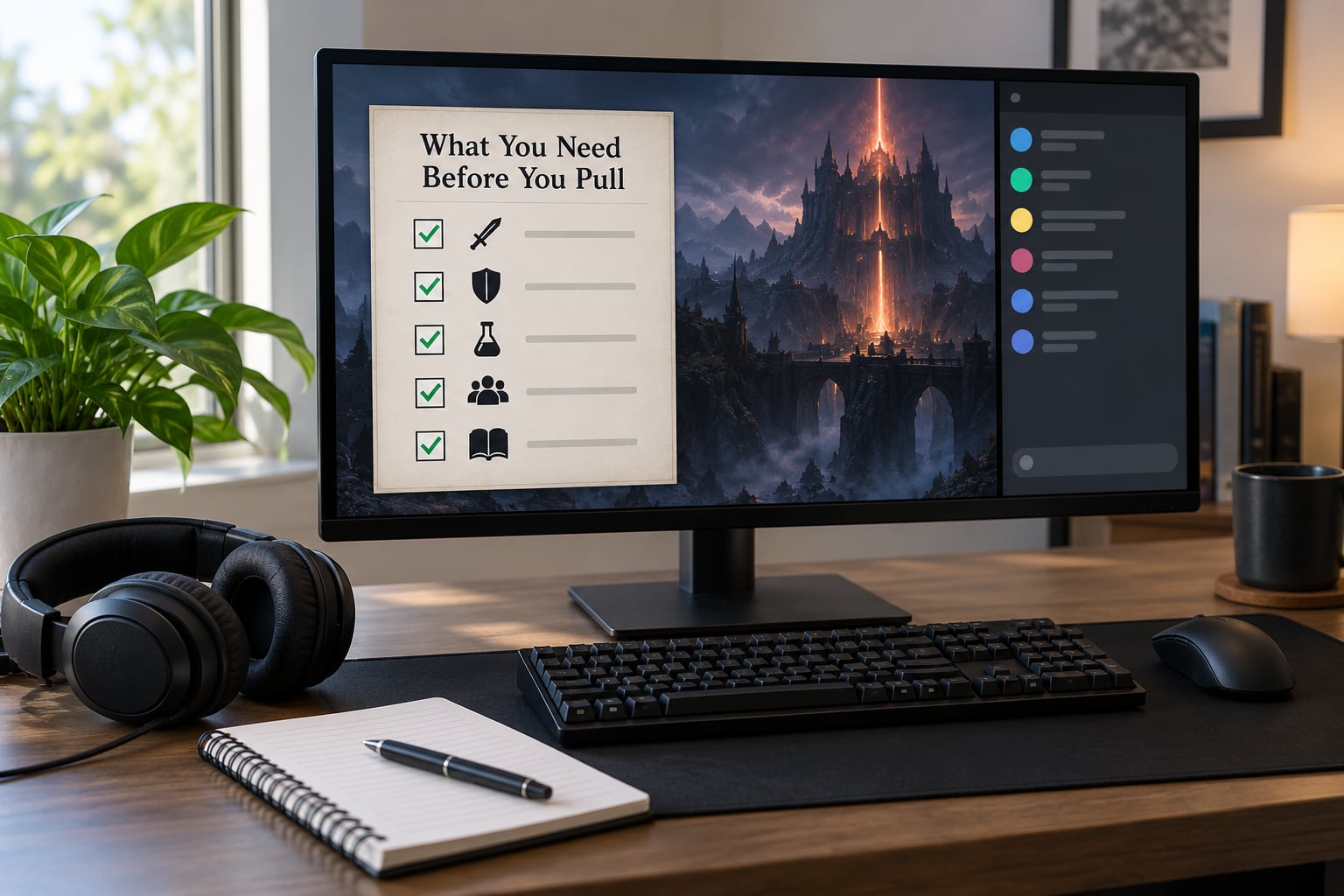
Preparation is the baseline expectation of the role. A lead who does not know the encounter leaves twenty people free to argue, and the loudest voice wins by default. Before raid night you need five things, and none of them require special software.
The encounter itself. A phase-by-phase timeline with the mechanics that actually kill people, the timings people get wrong, and how long the fight runs at your team’s damage level. If your notes are a wall of text, you will not use them in the middle of a pull.
Team composition information. Who is coming, what roles they fill, and where you are thin. A group with two healers and four ranged attackers has a structural problem no amount of shotcalling fixes, and you should know that before you assign anything.
A communication setup. Voice for the fight, text for the plan. Decide the rules up front: one voice channel during a pull, no arguing in it, and a single question channel afterwards if the group needs one.
Somewhere to keep notes. A document, a shared text file, or a pinned message. It should hold the strat, the assignment list, and the changes you make between attempts so you are not reciting them from memory every pull.
A fallback and a stop point. Every plan has a version B, and every raid night needs an end. Decide both before you start and tell the group, because decisions made while people are tired are the ones nobody trusts.
The day-of-raid timeline that keeps a night organized
This is the sequence I run almost every night, and the whole thing fits on one screen.
| Moment | What the lead does |
|---|---|
| Log-in | Post the strat and the assignment list in text, once |
| Ten minutes before | Confirm roles, flag absences, reassign gaps |
| Ready check | Ask who needs the plan re-explained, answer briefly |
| Pull | Call mechanics, stay quiet when the plan is working |
| After a wipe | Diagnose the cause out loud in one or two sentences |
| Midpoint | Call a five-minute break before people get sloppy |
| Loot and wrap | Hand out loot by the stated rule, thank people, log what to fix |
One commenter on a competitive raiding forum compared the role to planning a convention: you have already done the homework long before anyone shows up. That framing is right, and it is also why leads who wing it are so exhausting to play with.
How to Be a Good Raid Leader: Step by Step
Prepare the Encounter Before the Raid
Watch guides, read notes, and pull the mechanics apart until you can explain each one in a sentence. Then write the plan for your team specifically, not the theorycrafted version for an ideal roster.
Set a realistic goal for the night. “Four clean attempts on phase three” beats “kill the boss,” because it gives the group a target they can actually reach and a natural stopping point when progress stalls.
Decide where to pull from. Every good strat I have seen has a variation ready for the moment the group hits a wall, and a lead with a version B keeps the night from turning into twenty repeats of the same failure. Assign the backup in advance so it is not a debate at midnight.
How you know it worked: when a new player asks a question during the pull and someone other than you answers it correctly.
Build a Team That Understands the Plan
Confirm attendance the night before, not at pull time. Know who is missing so you can plan around the gap instead of discovering it when an add spawns where nobody is standing.
Explain assignments individually and briefly. Ask each person to repeat back the part that matters to them, which takes about ten seconds and saves you a wipe later. A new raider on your fireteam who has never seen the encounter deserves five minutes of explanation and a chance to ask questions before the group is expected to move.
Leave a gap for questions instead of shutting them down. Someone who asks “why are we standing here” at 8pm costs you two minutes. The same person silently guessing at 9:30pm costs you a pull.
How you know it worked: the group can explain its own assignments to a stranger.
Communicate Clearly During Every Phase
Callouts should be short and timed. “Adds in five, spread left” beats a sentence that takes four seconds to say. Lead with the mechanic, then the direction, then the timer if there is one.
Give role-specific instructions only to the people who own them. Telling the whole raid what the healer needs every two seconds trains twenty people to ignore you.
Repeat back anything you are not certain landed. A quick “tank swap now, swap now” after a missed swap costs half a second and saves the attempt.
When the pressure spikes, shorten your language and slow your pace. Under stress, people hear less, so call fewer things and call them louder in meaning, not volume. Several people in community threads made the same point from different angles: a calm voice with clear wording fixes wipes, and yelling does not.
Know when to stay quiet. If the group is executing the plan, the best shotcalling is none at all.
Make Fast, Fair Decisions
Sort decisions into two piles. In-pull decisions are instant and not open for debate: whether to pull again, whether to add a second boss, which target to swap to. Strategic decisions, like how the group handles a mechanic going forward, can wait for the debrief.
Say the in-pull decision as a decision. A lead who asks “should we try it again?” hands the group a debate they will finish mid-fight.
Decide by the priorities you agreed on before the night, not by who complained last. Consistency is what makes a group trust the calls, and the fastest way to lose that trust is to play favorites. If you change your mind, say why, because the reason is usually tactical rather than personal.
How you know it worked: after a decision, people pull again without a debate in voice.
Handle Mistakes Without Blaming Players
A wipe is information. Name the cause in the moment in one sentence, keep the group moving, and leave the person discussion for after the fight.
The in-the-moment script is simple: state the mechanic, state what happens next, pull again. No names, no sarcasm, no replaying the mistake while the group is still standing there.
After the raid, talk to people one on one. Ask what they saw before telling them what you saw, because the question gets you information and the statement starts a debate. Then describe behaviour and impact without characterising the person: “two interrupts were unused on the third add,” not “you never press anything.”
Protect the team from public shaming. Mistakes paraded in guild chat teach everyone to hide their mistakes from you, which is the opposite of what you need. If someone needs to hear it, they hear it privately, and if someone needs to leave the roster, that is a separate conversation with its own script, not a punishment delivered at the wipe.
How you know it worked: people keep making hard calls instead of playing safe around you.
Review the Raid and Help Players Improve
Pick one or two priorities after the night, not ten. A group working on two things improves faster than a group with a twelve-item to-do list, because the list is what pulls get abandoned for.
Use the tools the game gives you. Damage logs, death logs, and recordings exist so a lead does not have to hold every number in their head. Most fights take five minutes of review to show you the mechanic the group is dying to, and that five minutes replaces an hour of guessing.
Give feedback tied to an action, not a personality. “Rotate the second interrupt onto the add at 40 percent” is usable tonight. “Your awareness needs work” is not, and players hear it as an insult.
How you know it worked: the next night starts with the change already in the plan instead of the same mistake repeating.
Set a Stop Point and Protect the Team’s Energy
Decide when the night ends before it starts, and keep to it. Ninety minutes of no-progress grinding is where leads quit, and tired players make more mistakes on simple mechanics than rested ones do on hard ones.
Watch the early warning signs: deaths to mechanics the group cleared an hour ago, clipped and snappy comms, numbers dropping in the log. When you see two or three at once, take a five-minute break or call the night.
Leading a roster is a volunteer job with real costs. Pass it on when it starts costing you more than it gives back, and hand over notes so the next person is not starting from a blank document.
Who You Delegate To, and What They Say
You cannot watch everything. Named roles with one job each is how a raid leader stays sane, and it is the single most common piece of advice in first-time leading threads.
| Delegate | Their call | When they take over |
|---|---|---|
| Add caller | Spawn location and direction | You are watching a mechanic timer |
| Cooldown caller | Which person uses which cooldown, and when | Interrupts and burst windows |
| Positioning lead | Where the group stands and moves | Movement-heavy phases |
| Backup caller | Repeats a missed call or covers a gap | You missed it or lost voice |
| Class leads | Consumables, composition questions, roster notes | Out-of-combat planning |
Delegating is trust, and players notice it. It also builds a team that can self-execute, which matters more on hard progression nights when a single voice cannot carry everything.
Common Mistakes That Ruin a Raid Team
Each of these is common enough to be worth naming, and each has a fix you can apply on your next night.
Micromanaging. Correcting individual positioning every few seconds trains the whole raid to tune you out. Fix it by picking one or two anchors to watch and letting the group handle the rest.
Dumping the whole strat at once. A twelve-point document read aloud gets retained by nobody. Fix it by covering the plan in the first three minutes and the rest as it comes up.
Ignoring attendance. No-shows, late arrivals, and AFK players cost more progression nights than any mechanic. Fix it by publishing a start time and a cutoff, applying it to friends and officers first, and having a bench list ready.
Arguing during a pull. A debate that lasts ten seconds costs three or four attempts. Fix it by moving every disagreement to after the fight, without exception.
Skipping the debrief. If a wipe teaches nobody anything, the group grinds until someone quits. Fix it by scheduling fifteen minutes of review as part of the night, not as an optional extra.
Taking criticism personally. Someone pointing out that your calls are unclear is information you want. Fix it by thanking them before you respond, and deciding later whether they were right.
Grinding through fatigue. Tilt at pull thirty is what turns a bad night into a former raider. Fix it by committing to a stop time before the night and honouring it even when the boss is at 12 percent.
Letting loudness decide. If the most aggressive voice sets the pace, the calmest players disengage and the group gets worse at playing, not just at talking. Fix it with consistent standards applied to everyone, and a private word for anyone who is bullying rather than helping.
A useful rule to keep in your head: guild direction is democratic, in-pull calls are not. Everyone gets a vote on attendance policy, loot rules, and how many nights a week the guild runs. Nobody gets a vote on whether to interrupt the cast at three seconds, because the decision has to be made once and followed immediately.
Frequently Asked Questions
How do I prepare as a raid leader when I am still learning the encounter?
Say so, plainly, and say what you need. Tell the group you are still learning but you have watched the guides, then tell them what is still open: usually one or two mechanics and how to handle them. Ask a class lead or a veteran raider to own those pieces, and write down every answer so the plan is complete before you pull. Leading while you learn is fine; winging it without telling anyone is what erodes trust.
How much communication is too much during a difficult raid?
If your callouts outnumber the mechanics, it is too much. A good pull has a handful of decisive calls and then silence, because a group that is busy listening is not watching the boss. Rule of thumb: one call per mechanic, one timer per timed event, and role instructions only to the person who owns the job. If people keep asking you to repeat, the problem is length, not volume.
What should a raid leader do when two players disagree?
Do not arbitrate mid-pull; that is a debate the group will finish in the middle of a mechanic. Note who disagrees, pull, and handle it after the fight with both of them, hearing each side fully before deciding. Then explain the decision and the reasoning behind it. Understanding how to be a good raid leader means most of these disagreements are really about unclear rules, and fixing the rule fixes the argument for good.
How can I tell whether my team understands the encounter plan?
Ask them. Before the pull, have two or three people explain a phase in their own words, and check that they name the same positions and timers you wrote down. A second test is whether they answer questions for each other during the night. If you are still answering everything yourself after three pulls, the plan needs to be re-explained in smaller pieces, not delivered louder.
How should I give feedback after someone makes a serious mistake?
Private, specific, and about the action. Ask what they saw first, then describe the mechanic and the outcome without characterising the person. Say what changes next time, and confirm they got it. Skip the guild channel entirely, since public corrections teach everyone to hide mistakes from you. If the same mistake keeps happening, treat it as a systems problem and change the plan rather than the player.
When is it better to change the raid strategy instead of repeating the same plan?
Change it after two or three clean-ish attempts that die to the same thing, or the moment the plan asks people to do something the roster clearly cannot execute. Keep a version B ready from the start so the switch is one conversation instead of a rebuild. Change one variable at a time, otherwise you will not know which edit helped. And say out loud that you are changing it, with the reason, so the group is not left guessing.
None of this is game-specific. The same loop works in a 20-player World of Warcraft roster, a six-person Destiny 2 fireteam, or a Final Fantasy XIV savage party, because the mechanics change and the leadership core does not.
Conclusion
If you take five things from this, start with these. Write a one-page plan and share it before raid night. Give every responsibility a name and an owner. Keep your callouts short, then go quiet when the group executes. Respond to a mistake with the mechanic, not the player’s name. Pick one improvement after the night and put it at the top of the plan.
Everything else, delegation, tools, roster management, pacing, gets easier once those five hold. And if you take over a roster that is already struggling, the fix is usually structural rather than inspirational: attendance, breaks, and one honest conversation tend to move a team more than any amount of extra homework.