Licensed games have a bad reputation because they are usually built backwards. A studio buys a famous name, then discovers the release date belongs to the film, the budget lost a slice to the licence fee, and creative control belongs to someone who has never played the genre. Rushed production, marketing-led design and thin source material do the rest.
A licensed game is any video game built on intellectual property owned by someone else: a film, a TV show, a comic, a book, or a sports league. The studio pays for the right to use it, then has to invent an entire game around a property it does not own and cannot change at will.
One quick note before we start, because the search results for this question are full of it. A licensed game here means a game made from external intellectual property. That is a completely different thing from the digital-ownership debate, where platform holders describe purchases as licensed, not sold, and a game you paid for can in theory be withdrawn from an account. Same word, unrelated problem.
What follows is the version about the games themselves.
Table of Contents
- 1Where the Reputation Comes From
- 2Why Licensed Games Have a Bad Reputation: Common Causes
- 3How Player Expectations Make the Problem Feel Worse
- 4Are All Licensed Games Bad?
- 5Why Licensed Games Feel Like Cash Grabs
- 6How Publishers, Developers, and Players Amplify the Problem
- 7What Does a Good Licensed Game Do Differently?
- 8How Can Players Judge a Licensed Game Before Buying?
- 9Frequently Asked Questions
- 10Why do licensed games often receive bad reviews?
- 11Are licensed games usually worse than original games?
- 12Does using a movie or television license guarantee a game will fail?
- 13What is the biggest problem with licensed video games?
- 14How can I tell whether a licensed game is worth buying?
- 15Conclusion
Where the Reputation Comes From
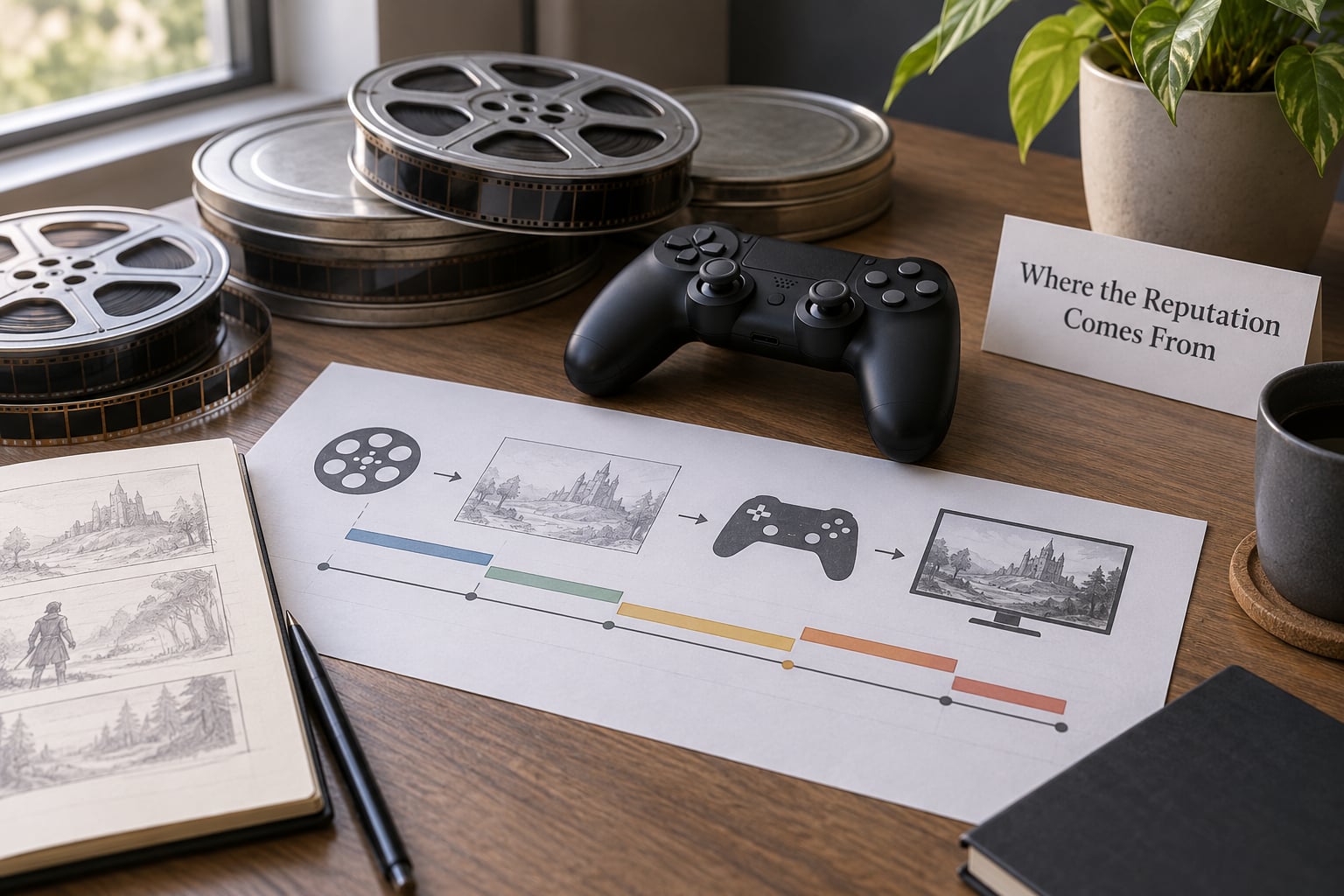
The bad reputation is not a marketing invention. It dates back to the earliest mass-market attempts to build games out of properties people already knew, and the earliest of those attempts were genuinely terrible in ways that still set the tone for how the rest are judged.
The 1982 crash is the usual starting point. Atari’s E.T. the Extra-Terrestrial shipped in time for the film’s release, was built quickly, was packed with more copies than the hardware could sell, and is still the title most often blamed for burying the American industry for years. Superman’s Nintendo 64 game from the following decade became the mascot for the opposite failure: a famous character trapped in a 3D game the character was completely unsuited to.
After that came the long middle stretch. Side-scrolling movie games, CD-ROM adventures with full-motion video, licensed kart games that differed from one another mainly in the licence sticker. A lot of this material is genuinely forgettable rather than merely flawed, which is what makes the whole category feel uneven in a way most genres do not.
It is worth separating two things people routinely mix together. Hating a licensed game says nothing about the film, the show or the comic it came from. Plenty of excellent properties have produced appalling games, and the reverse happens too. The complaints below are about the pipeline, not the source material.
And the pattern is a perception built by players from many releases over many years, not proof that any individual licensed game is bad. Forum threads on ResetEra, GameFAQs and Reddit are sharply split on this: some argue good licensed games are no longer rare, others still call every tie-in a cash grab. Both readings are built on real examples.
Here is the short version before the detail.
- The release calendar belongs to the film or the season, not to the game’s needs.
- The licence fee is paid before development starts, and it comes straight out of the money that would have gone into the game.
- The marketing budget is routinely larger than the development budget.
- The genre gets copied from whatever was commercially hot that year rather than chosen from the property.
- Source material that runs ninety minutes gets stretched into something with fifteen hours of filler.
- The team often has no idea how the property actually works, so the writing and the rules come out wrong.
Why Licensed Games Have a Bad Reputation: Common Causes
Every one of these shows up again and again, across different decades and different genres. Recognising the pattern is the fastest way to read a new announcement.
| Common cause | What it looks like in practice |
|---|---|
| Rushed schedule | The game is announced in the same breath as the film, so polish and bug-fixing happen in whatever days are left over. |
| Sequel dependence | Rather than a new mechanic, the project is justified by a franchise sequel or a remake, and the game inherits that reasoning. |
| Marketing-led design | The trailer sells spectacle and set pieces; the finished game is a generic template wearing a licensed skin. |
| Reused or shallow systems | Combat, level structure and menus are lifted from the studio’s previous release or assembled from an off-the-shelf kit. |
| Weak adaptation choice | The game retells the story beat for beat instead of adding something the story can actually carry. |
| Mismatched platform | A comedy aimed at a general audience is given a control scheme built for a twitch action game, or the reverse. |
| Poor communication | Assets arrive late, approvals stall, or the story changes mid-production, and the team absorbs the delay in crunch. |
How Player Expectations Make the Problem Feel Worse
Familiarity raises the bar before anyone plays a word of it. When a game carries a name people already love, players are not evaluating it from zero. They are measuring it against the film, the childhood cartoon or the trilogy they already have an opinion about, and that comparison is unfair by construction.
It helps to separate two different kinds of confidence. Anticipation is what a property generates: a trailer, a logo, a launch date. Confidence is what a studio generates over years of prior releases. Licensed projects lean on the first and usually have none of the second, which is why the marketing can be enormous and the reception still flat.
Take a buddy-cop comedy franchise and imagine the tie-in is a stealth mission where you crouch behind crates for most of its length. Nothing in the source material supports that verb. The mechanic came from whatever template was popular when the project was greenlit, so the story ends up bending around a system it never wanted.
Two other effects stack on top. Brand anchoring means each new entry inherits the verdict on the last one, so a licensed series has to be genuinely good twice to clear the bar its own history set. And selection bias is brutal here: the failures are memorable, named in videos, argued about for years, while a competent licensed release gets no coverage at all. The public canon of licensed games is a highlight reel of the worst cases, which is not the same as a representative sample.
That is why the reputation outlives so many of its own examples.
Are All Licensed Games Bad?
No. Plenty of licensed games are good, and a fair number are excellent. The difference is almost never the name on the box. It is whether the licence was treated as a marketing shortcut or as the starting point for a design.
| Signal | Licence as a shortcut | Licence as a starting point |
|---|---|---|
| Design goal | Recreate the film so the audience recognises it | Find a mechanic the property supports better than the film did |
| Story | The same plot, beat for beat, in more dialogue boxes | An original story set inside the same universe, with its own stakes |
| Team and schedule | Assigned late, built around an immovable launch date | Chosen for genre fit, given a realistic runway |
| Budget | Marketing outguns development in the trade press coverage | Most of the spend sits in the game itself |
| Genre | Whatever was hot when the project started | Whatever the property’s tone implies |
| Long term | Nothing planned past the release | Sequels, support and follow-up treated as likely |
The right-hand column has real names attached. DuckTales, Aladdin, GoldenEye 007 and Spider-Man 2 are the historical examples people reach for, because each turned a licence into a game with mechanics the property deserved. The Walking Dead from Telltale and Middle-earth: Shadow of Mordor told new stories inside established worlds instead of retelling the source. Batman: Arkham made the licence feel like an advantage, and the LEGO games built an entire publishing identity out of licensed properties.
MachineGames is the clearest modern case. Coming off The Chronicles of Riddick: Escape from Butcher Bay, the studio took on properties everyone expected to fail, deliberately kept expectations low, and built Wolfenstein and Indiana Jones around contained settings and new casts rather than trying to out-film the films. Low expectations became a commercial asset, which is its own lesson about how the reputation works.
The other half of the answer matters too. Original properties fail on exactly the same pressures: wrong genre, weak team, no time, a design that chased a trend. Licensing is a common cause, not a guarantee of failure.
Why Licensed Games Feel Like Cash Grabs
Cash-grab is the accusation players reach for when the commercial intent feels louder than the game. The signals are recognisable, and they are not all equally meaningful.
The meaningful ones come down to a mismatch. When a property gets campaign attention out of all proportion to the amount of game behind it, when a store page shows pre-order and edition bonuses as the main features, or when an online or multiplayer layer appears in a game whose core idea never needed one, that is the marketing driving the design backwards.
Another meaningful signal is reused content. Recognisable environments, identical enemy designs and a progression system that feels copied from another studio’s game all point to a project assembled from parts rather than built.
The cosmetic ones get mixed in by mistake. Deluxe editions, cosmetic packs and store bonuses exist across the whole industry and tell you almost nothing about a specific game’s quality. A licensed game can have all of them and still be well made. What matters is whether they are the only thing being offered.
Honest scope communication is the difference. A team that says up front, in the store description, what the game contains and how long it runs has done something the cash-grab accusation rarely survives. Vague promises and a trailer full of things the finished product does not contain are the real tell.
How Publishers, Developers, and Players Amplify the Problem
Bad licensed games are usually the result of a chain, not a single decision. Once pressure enters at the top it gets weaker at every step down, and the people closest to the code are the last to get a say.
It usually begins with the licensor. The film or show has a date that cannot move, and marketing wants the game in the same window. The studio that gets the job is often chosen for availability and cost rather than genre fit, which is how a team with a strong record in one kind of game ends up building another kind entirely.
Approval then works as a slow leak. Assets arrive late, creative decisions go to people who care about the brand rather than the controller, and a change to the story three months before release cannot be negotiated away. Developers describe licensed work as uniquely stressful for a simple reason: the constraints arrive from outside and are not negotiable from inside.
Launch then compounds it. Reviewers are scoring an unfinished feeling from a product that had less time than comparable original games, and players, who signed up for a film, read the gap as intent rather than circumstance. A first impression that harsh is very hard to reverse.
Post-launch patches get read through that lens too. Work that arrives months later to fix the fundamentals tends to be announced as an apology, when it is usually the same rushed project finally being finished. The corporate layer where the licence was agreed is also the layer with no obligation to the player afterward, which is why support is thin and why the THQ collapse remains the reference example of what happens when licence obligations and payroll obligations meet.
What Does a Good Licensed Game Do Differently?
The successful ones are not noticeably better funded than the failures. They differ in six decisions, and the decisions are available to any team with a licence and a deadline.
- Identify what the licence contributes beyond name recognition. A property is only useful if it suggests something the studio can build on. If the answer is a logo and an audience, there is no game here yet.
- Design to the production the budget can actually support. A contained setting, a limited cast and a focused campaign are design decisions, not compromises.
- Adapt rather than transcribe. The job is to translate a story into interaction, not to re-shoot it in pixel form. Shadow of Mordor and Telltale’s The Walking Dead are the standard here.
- Say what the game is, early. Store pages and trailers that describe the real content protect the project as much as they inform the player.
- Test whether it stands up without the name. If the design only works as fan service, the review scores will show it.
- Keep the people who made the property involved when it helps. South Park: The Stick of Truth is the case forum threads keep returning to, because the creators themselves fixing the material was the visible turning point.
A quick hypothetical. Take a mid-budget science-fiction film licence and two studios. The first treats the film as a script to be played back: a linear story, a chapter list, cutscenes between shallow stages. The second treats it as a premise, builds a single system the whole film argues about, and structures levels around that system.
Same budget, same deadline, same name on the box. One of those is a licensed game that gets a reputation, and the other is a licensed game people mention when they argue the reputation is out of date.
How Can Players Judge a Licensed Game Before Buying?
Most of the useful signals are available before launch, and none of them involve the franchise name.
- Check the developer’s recent work. Not the studio’s best title, the last two things they shipped. That tells you what the team is currently good at.
- Look at the genre and the business model. A non-player narrative attached to a comedy franchise, or an always-online requirement on a story game, is a warning worth weighing.
- Read what reviewers actually praise and criticise. If every review mentions repetitive stages or a thin middle, that is the shape of the game, not a sampling error.
- Look for a system, not a retelling. Previews that show one interesting mechanic repeating in different contexts are a better sign than trailers full of story scenes.
- Check whether the scope is stated honestly. A clear description of length and content tells you the publisher expects the game to be bought on its merits.
- See whether support is plausible. Patch history and roadmap posts on the developer side say more than the publisher’s marketing will.
- Keep the two judgements apart. Whether you want to visit this fictional world is one question. Whether this particular game is any good is a separate one, answered by the developer, the design and the reviews.
Frequently Asked Questions
Why do licensed games often receive bad reviews?
Because the work is usually constrained from outside before the team starts. The release date comes from the film, the licence fee has already taken a slice of the budget, creative decisions sit with people who never play the genre, and the team that ships is rarely the team that would have been chosen for fit. Reviewers then compare the result to the property rather than to comparable original games.
Are licensed games usually worse than original games?
On average, the pattern suggests yes, mainly because of schedule pressure rather than the licence itself. Original games suffer the same failures when time and money are cut. Licensed projects hit those limits more often, because the deadline is set by something the studio does not control and the budget was negotiated before any design work happened.
Does using a movie or television license guarantee a game will fail?
No. GoldenEye 007, Spider-Man 2, the Telltale Walking Dead games, Batman: Arkham and the LEGO range are all licensed games that people still recommend years later. What separates them is rarely budget. It is time, creative freedom, a mechanic the property actually supports, and a team that was picked for genre fit rather than availability.
What is the biggest problem with licensed video games?
Time, more than anything else. Big games normally take two to three years to build and polish, while a film tie-in is often greenlit with under two years and no room to move the date. That single constraint explains thin levels, reused systems, weak writing and limited bug-fixing at once, and it is why studios that license something without a launch deadline tend to do well.
How can I tell whether a licensed game is worth buying?
Judge the developer first, then the design. Look at what the studio shipped most recently, read whether reviews praise one strong mechanic or complain about repetitive stages, and check that the store page describes the real content and length. Treat the famous name as a separate question from quality, because the two rarely travel together.
Conclusion
So: licensed games have a bad reputation mainly because rushed production, commercial expectations and weak adaptation overshadow whatever the property promised. The date comes from outside, the budget is partly spent before the design starts, and the marketing is often bigger than the game.
That reputation is earned, but it is also dated, and it now costs studios more than it used to. MachineGames turned low expectations into a strategy, and studios that license something without a launch deadline keep producing games that hold up years later.
So stop reading the logo and start reading the store page. Check the developer’s recent work, look for a system rather than a retelling, and treat the franchise as one question and this particular game as a separate one. As of 2026, that is still the most reliable filter there is.