Playing solo in a team-based game means queueing into a match with strangers you did not pick, no voice comms you can count on, and no plan beyond your own decisions. You win by filling a gap nobody else will fill, giving your team information, and staying useful when nobody is coordinating. The seven tactics below turn a five-person objective into a personal decision you can make on your own.
I play a lot of ranked shooters alone, and the shift that helped me most was small. I stopped trying to be the best player on the team and started trying to be the most reliable one. Reliability is a skill you can build before the match starts.
Everything below works across shooters, MOBAs, and battle royales. If you want the same thinking applied to a specific title, the method transfers directly.
Table of Contents
- 1What You Need to Play Solo in Team-Based Games
- 2Step-by-Step: The Solo Player’s Method
- 31. Pick a role that works without constant support
- 42. Choose a safe starting position and learn the map
- 53. Set one objective before entering the fight
- 64. Make the highest-value play, not the loudest play
- 75. Use short, practical communication
- 86. Avoid fights your role cannot win
- 97. Review one decision after each match
- 10Common Mistakes
- 11Frequently Asked Questions
- 12Can you win a team-based game while playing solo?
- 13What is the best role for playing solo in team-based games?
- 14How should I communicate when my teammates are not communicating?
- 15Should I chase kills or play the objective when solo?
- 16How do I avoid feeling useless in a team-based match?
- 17What should I do when my team is uncoordinated or behind?
What You Need to Play Solo in Team-Based Games
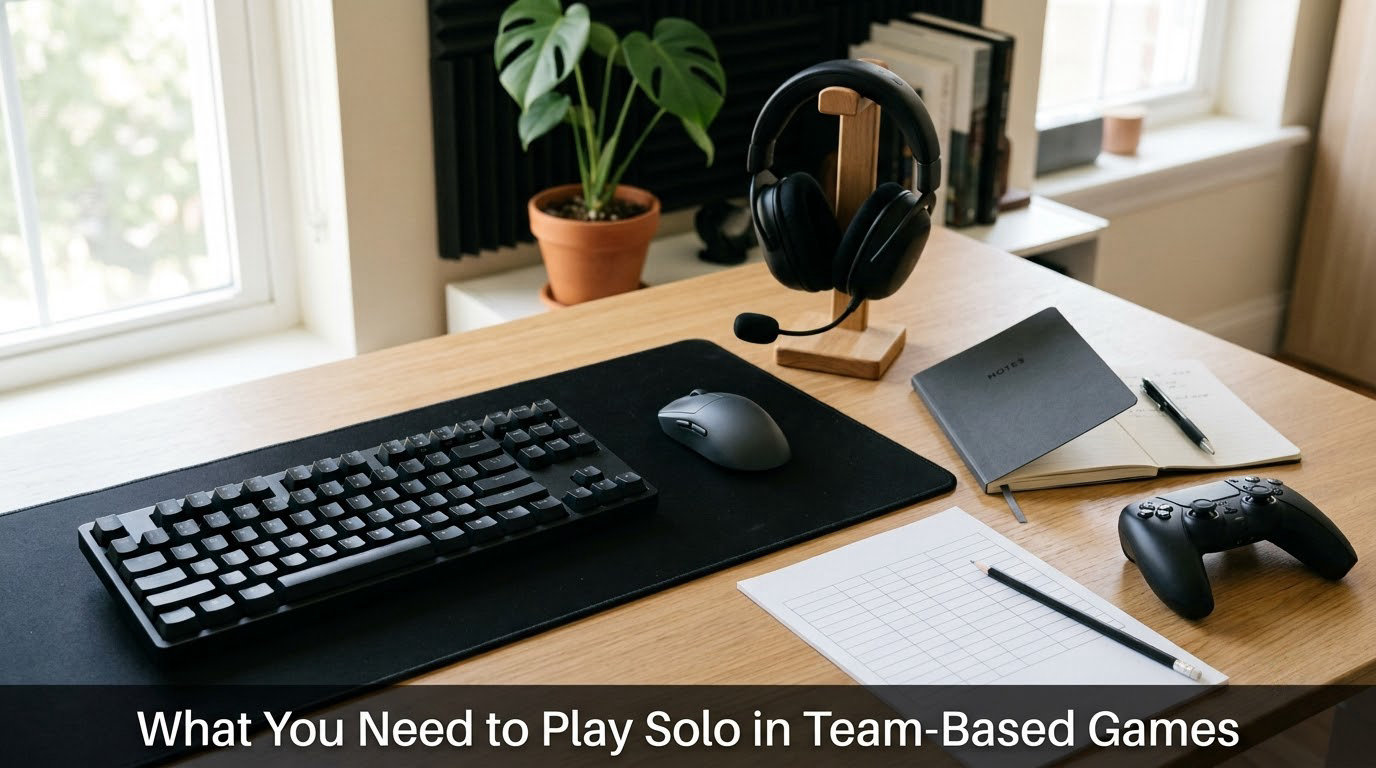
Four things decide whether a solo match goes well, and none of them require a friend to log in.
A role you can define in one sentence. If you cannot describe your job in a short phrase, teammates cannot plan around you. “I hold the back corner and watch the main entrance” is a job. “I’m a DPS” is a wish.
Map knowledge for the mode you queue. Solo players win on rotations and angles, not aim alone. You need to know where the objective sits, which paths reach it fastest, and where you can retreat to when a fight goes wrong.
A communication habit that survives silence. Assume nobody is talking. Build your calls around pings and short phrases that still make sense with all chat turned on, all voice muted, and one teammate on holiday.
A loadout chosen before the queue starts. Fiddling with your setup in the first ninety seconds is a choice you make while four other people wait. Decide your role, your side, and your two most-used abilities before you search.
Step-by-Step: The Solo Player’s Method
1. Pick a role that works without constant support
Choose the position the team is most likely to leave empty, because that is where one player changes the result. A player on the Reddit community for Rematch described the cleanest version of this: play centre-back, the spot nobody volunteers for, so you are never the one caught out of position.
Know the limits of the role before you take it. A healer who cannot peel for themselves dies to a single flank, and a damage player with no escape tool gets punished for every miss. Self-sufficiency comes from knowing exactly what your role cannot do, not from pretending it can do everything.
2. Choose a safe starting position and learn the map
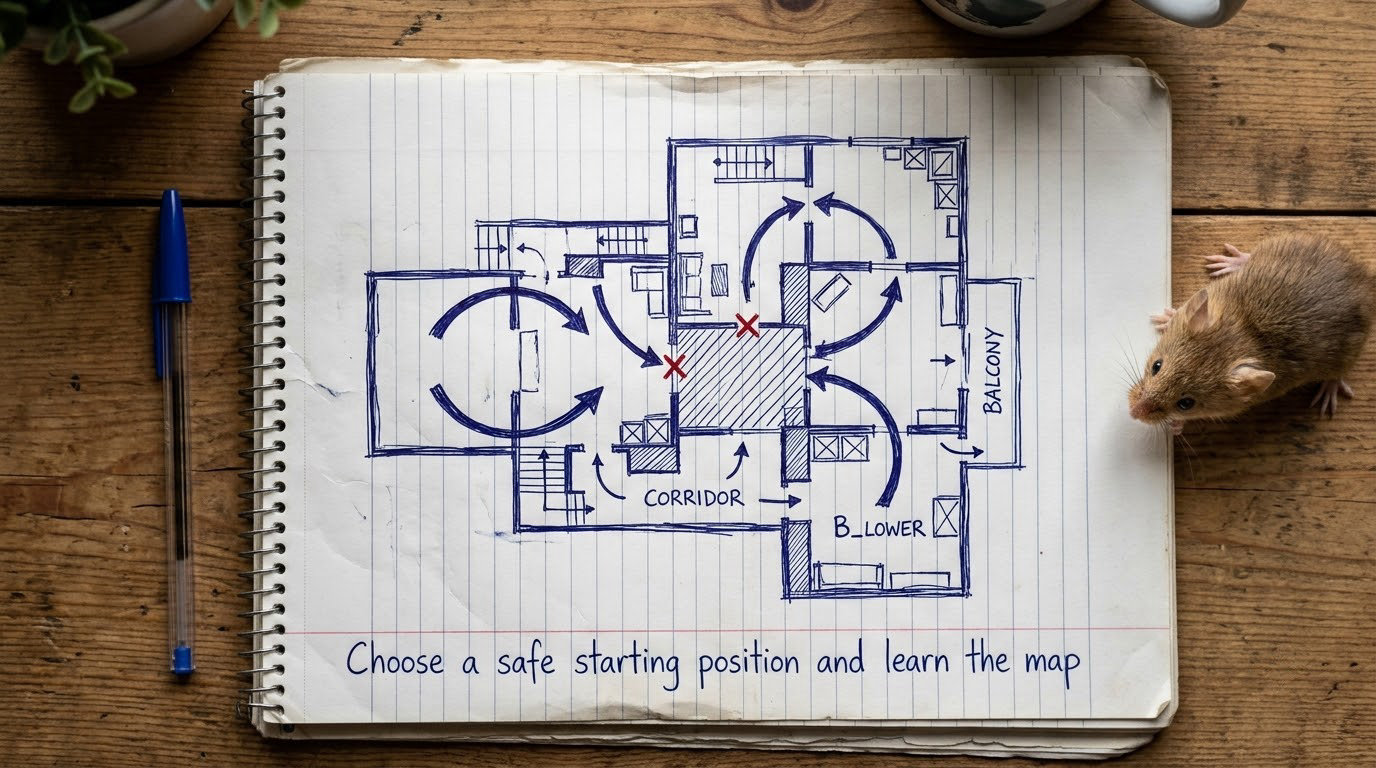
Positioning is the cheapest advantage in any team game, and it is the one a solo player can control completely. Start where you have cover, where you can see an approach, and where you can leave in under three seconds.
Solo queue rewards one specific habit: treat every situation as a one-versus-three until your teammates show you otherwise. That framing comes straight from Apex Legends community advice, and it holds in other games too. Plan for the situation where nobody helps you, then relax into the one where they do.
Before the objective becomes contested, decide your rotation path and your fallback point. A player who knows the way out fights differently from a player who does not, and that difference shows up in the last thirty seconds of a round.
3. Set one objective before entering the fight
Before you commit to a fight, name what winning it gets you. If the answer is “the spike,” “the payload,” “the zone,” or “the last enemy with a gun,” the fight is worth taking. If the answer is a vague “we might win if we get a kill or two,” it is not.
Solo players lose entire matches by picking fights that give the team nothing. You get two eliminations and lose the site anyway, and the scoreboard shows you looking busy while the objective sits untouched.
Write the objective down before the round starts if your game lets you. Players who keep a short match note learn faster than players who only watch replays, because the note captures what you were thinking at the time instead of what you remember afterwards.
4. Make the highest-value play, not the loudest play
Not every fight is worth having and not every elimination helps your team. Rank the available actions each round: the objective, the elimination that removes an ability to contest it, the rescue that keeps a teammate in the fight, the information that stops an ambush, and only then the extra damage number.
The order changes with the match state. Early rounds usually reward information and safe trades. Late rounds reward the objective above almost everything else, because a single elimination one player short of winning is worth more than three eliminations that achieve nothing.
This is where a solo player quietly outperforms an average team. You do not need a highlight to be the most valuable person in the lobby. A flank that opens the site for three teammates is worth more than any loud entry.
5. Use short, practical communication
Keep calls to two or three words and tie them to something actionable: a location, a threat count, a rotation, or a request. “Site, three,” “rotate now,” “need help here” do more work than a paragraph of typing, because your teammates can act on them in a second.
Use pings before typed messages, and use both before voice. Ping the location, then say the one word that changes what people should do. A ping with no follow-up is a location report; a ping plus “push” is an instruction.
Never type an accusation, never type “mid or feed,” and never throw after a lost round. A player on r/AgentAcademy put the useful version plainly: stop blaming your teammates, take responsibility for outcomes, and guide with simple calls. You are not in charge of the match, so criticism aimed at strangers costs you allies you still need for forty more minutes.
Mute without hesitation. Turn off all voice the moment someone starts screaming, and mute an individual player who has made it personal. The game plays exactly the same either way.
6. Avoid fights your role cannot win
Decline the fight when teammates are missing, when you are outside your role’s range, when you have no way back, or when taking it contradicts the objective. Four checks, about two seconds, and they stop most of the deaths that feel unfair.
Overextending is the most common solo-queue death that players blame on their team. Nobody asked you to be the last player alive on a point; they asked you to be a player who is still alive for the next fight. A retreat that lets your team win the round is not a failed play.
7. Review one decision after each match
Reviewing a full match teaches you nothing useful. Pick one decision, find the moment you made it, and name the information you had at the time. That single habit is what turns twenty losses into visible progress.
Cycle through four areas: your positioning at the start of the round, your timing on the objective, one communication you skipped, and one thing you did correctly that you should repeat. Write one sentence. Then queue again.
Common Mistakes
Playing to prove you are better than the team. Solo players who take every fight usually end up on the scoreboard without touching the objective. Correction: name the objective before the fight, every time.
Queueing while tilted. A bad loss makes the next game worse, and the thread of losses is what burns people out of ranked entirely. Correction: after two losses that annoyed you, stop for the night. Two is a signal, not a sample size.
Typing instead of pinging. Text takes longer to read and often turns into an argument nobody can act on. Correction: ping first, add one word if the ping is not enough.
Refusing the role nobody wants. Leaving the awkward position open guarantees it gets filled badly. Correction: take the unglamorous role and play it cleanly.
Blame shifting in chat. “Mid or feed” and early GG destroy the two allies you still need. Correction: never type a negative thing about a teammate’s performance in chat.
Forgetting that the match still has fifty minutes left. Players who lose hope in round four stop playing well for the rest of the game. Correction: set a target for the next round only, not for the match.
Before you queue once more, you should be able to answer three questions in a sentence each: what is your job, where will you start, and what is the objective that decides the round. If any answer takes more than a sentence, you are not ready yet.
Frequently Asked Questions
Can you win a team-based game while playing solo?
Yes, but not through individual heroics in most cases. Team-based modes decide rounds on objectives, and objectives reward coordination. Solo players win by filling the role nobody else takes, starting in a position they can hold alone, and making one high-value play per round instead of several low-value ones. Your win rate usually climbs when your play stops depending on what your teammates do and starts depending on what you can control.
What is the best role for playing solo in team-based games?
The position the team is most likely to leave empty, as long as you can survive there alone. In practice that is often a back-line or off-angle support role, a centrelock defender, or a recon character with information tools. Avoid a role whose value depends entirely on a partner performing perfectly. Pick the awkward role, learn its limits, and play it consistently.
How should I communicate when my teammates are not communicating?
Assume permanent silence and build a one-way communication habit. Ping the location, add one short word that tells people what to do, and never type a complaint. Two or three words tied to a location, a threat count, or a rotation are enough. Mute a player the moment the chat turns personal; the match plays the same and you stop absorbing someone else’s mood.
Should I chase kills or play the objective when solo?
Play the objective, and treat eliminations as a means to it. A fight is worth taking when winning it puts you closer to the site, the payload, or the last player contesting the round. An elimination far from the objective usually changes nothing. Late in a round, the objective outranks everything, because a single player short of winning is worth more than any extra damage number.
How do I avoid feeling useless in a team-based match?
Take responsibility for a job the team has not covered, then measure yourself on that job instead of on the scoreboard. Hold the angle, keep the information flowing, revive the teammate nobody else noticed was down, and make the call that starts the round. A player with a quiet statline and a decisive flank is often the reason the team won, and the flank is the part that matters.
What should I do when my team is uncoordinated or behind?
Slow the game down instead of speeding it up. Play the objective on a timer, make two short calls, and look for one trade you can win cleanly. Behind teams usually lose by taking fights that give them nothing, so removing yourself from those fights changes the scoreboard more than adding another entry. After two losses that personally annoyed you, stop for the night and come back fresh.
Start with three things in your next match. Say your job in one sentence before the round begins, start in a position you can hold alone, and name the objective before you commit to any fight. Fix those three and the rest of the method has something to build on. If you have been playing team games without friends for a while, the same habit that made solo queue survivable is the one that makes you worth queuing with.