If you die behind cover in shooters, the barrier almost always did what it was supposed to do. What changed is the timeline: your hitbox extends past the edge you can see, a shot was already in flight before you moved, the opponent was aiming at the place you always peek from, or the server resolved the kill against a position you had already left.
Those four explanations cover most deaths that feel unfair, and only one of them is really a network problem. Here is how each one works, how to tell them apart, and what actually reduces how often it happens to you.
Table of Contents
- 1Why You Die Behind Cover in Shooters: The Direct Answer
- 2How Cover Is Represented in a Shooter
- 3What Actually Causes Deaths Behind Cover?
- 41. Your hitbox overhangs the cover
- 52. You were not behind cover yet
- 63. The angle was already pre-aimed
- 74. A previous shot was still in flight
- 85. The cover was not actually solid
- 96. The server and your screen disagreed about time
- 10Why You Die Behind Cover in Shooters With Network Lag
- 11How Hit Registration Creates Unequal Cover
- 12Why Opponents Can Kill You While You Appear Hidden
- 13How to Stop Dying Behind Cover in Shooters
- 14How to Test Whether a Death Was Fair
- 15Which Shooter Mechanics Change the Problem?
- 16Frequently Asked Questions
- 17Why do I die behind cover if the enemy cannot see me?
- 18Is there an invisible hitbox behind cover in shooters?
- 19Can network lag make it look like I died behind cover?
- 20How do I stop opponents from predicting my cover position?
- 21Why does the game show a hit behind a wall?
- 22Is crouching behind cover always safer than standing?
- 23Conclusion: Make Your Cover Position Safer
Why You Die Behind Cover in Shooters: The Direct Answer
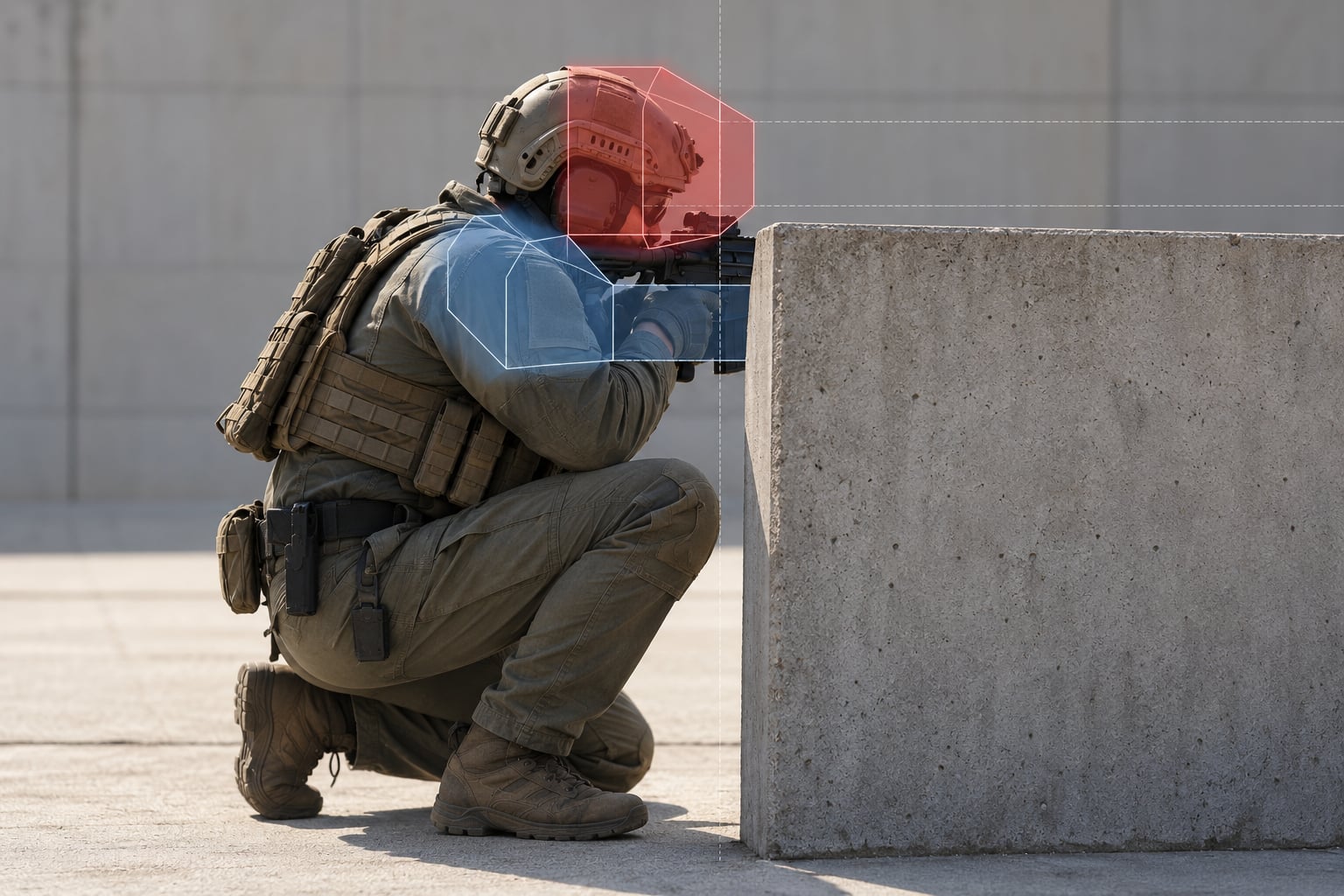
Why you die behind cover in shooters comes down to four things. Your hitbox is a simple shape that is usually larger than the character model, so your head or shoulder can sit in the open while the rest of you is hidden. The shot may already be travelling when you reach cover, which only matters for slow projectiles. The opponent may have aimed at your usual peek position before you moved. And the server may have validated the shot against an older snapshot of the world that predates you getting into cover.
That last one is the one most players mean when they say the game cheated. It is real, it is intentional, and most shooters do it because the alternative punishes the person who fired fairly.
How Cover Is Represented in a Shooter
A piece of cover in a shooter is really four separate systems layered on top of each other, and they do not always agree.
The first is collision geometry: the invisible surface that stops bullets and bodies. It is usually a box or a mesh, and it is rarely drawn to match its shape exactly. The second is the rendered mesh, the block you actually look at. Third is the player hitbox, usually a handful of capsules or boxes parented to the character model, with a head box on top. The fourth is the server’s position record, a history buffer of where every hitbox was on each tick.
Add a fifth thing and it gets confusing fast: the muzzle. Where a bullet spawns matters more than where the character is standing, because a weapon held past the corner of a wall fires from past the corner.
The gap between those systems is where most of the confusion lives. Visual protection tells you what you can see. Collision tells you what blocks a bullet. The hitbox tells the server what can be hit. None of them guarantee that all four line up at the moment a shot is fired.
What Actually Causes Deaths Behind Cover?
Ordered roughly by how often players run into them.
1. Your hitbox overhangs the cover
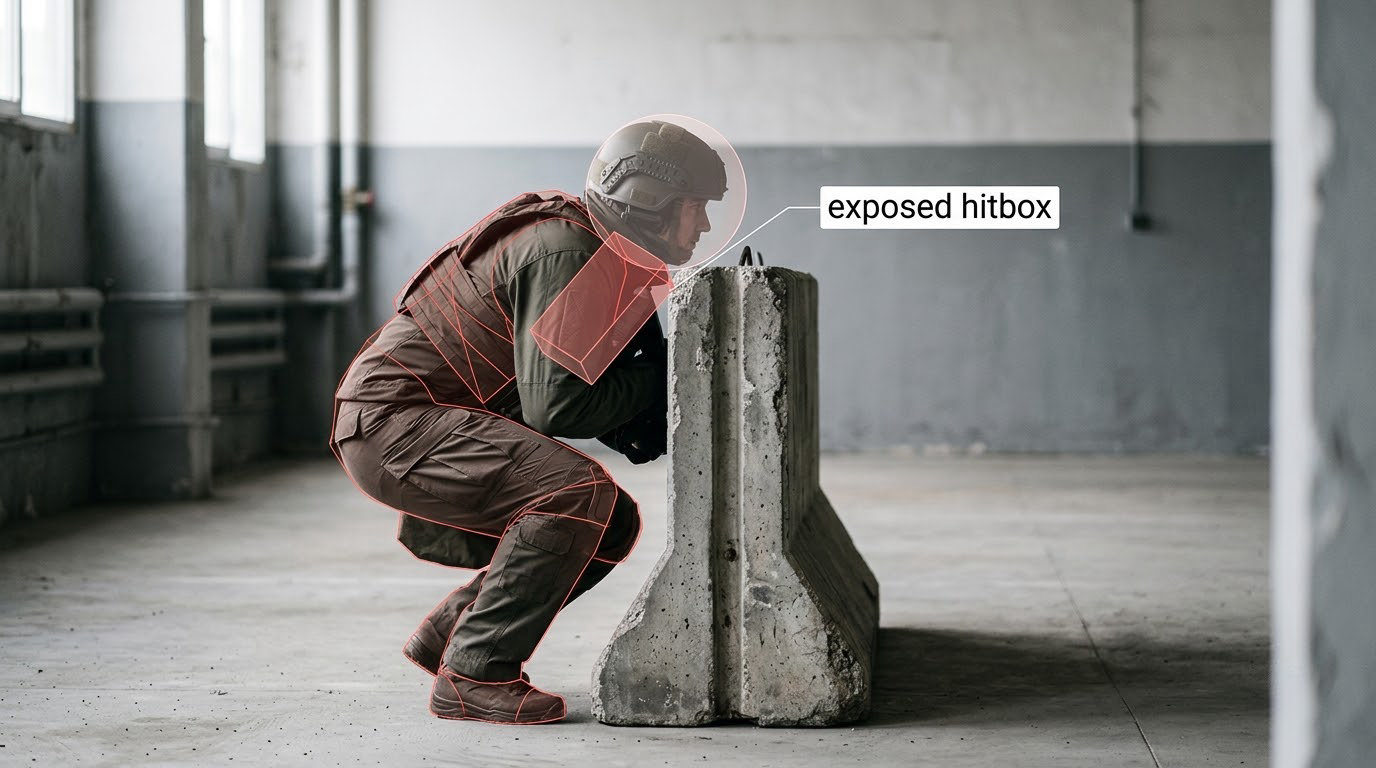
Player hitboxes are boxes, not silhouettes. A standing character’s shoulder box and head box frequently extend two or three inches past the visible outline of the model, and peeking around a corner exposes that overhang before anything else appears.
This is why fully clearing behind a flat wall still leaves you killable at the top of your head. It is also why the deathcam shows the enemy firing at what looks like empty air for the first fraction of a second before you drop.
2. You were not behind cover yet
This is the most common cause and the least satisfying one. Players describe it in every game: the movement to cover, the animation, and the frame you are visually clear of the edge all take time, and the shot that killed you was fired during the part of that movement where you were still in the open.
One Steam thread on Battlefield 6 put it plainly: “You didn’t get shot behind cover, you got shot when you were out in the open. When the enemy shot you there was a delay for that shot to register.” That delay is not a bug. It is travel time, and it applies to hitscan weapons too.
3. The angle was already pre-aimed
If you peek the same corner at the same height on the same timing every round, an opponent can hold that exact spot and fire before your model appears at all. From their screen, you stepped out. From yours, you were shot while your shoulder was still behind the wall.
Nobody has to see you to hit you here. They only have to know you.
4. A previous shot was still in flight
Slow projectiles and area weapons ignore line of sight entirely. A grenade, a tank shell, a rocket, an arc weapon, or a shotgun blast in a game with travel time all resolve wherever the server says they resolve, and they do not respect cover that is not thick enough to stop them.
5. The cover was not actually solid
Thin plywood, glass, railings, chain-link, smoke that has thinned out, low walls that an enemy can shoot over from a higher floor, and destructible or shootable materials all produce cover that looks safe and behaves like paper.
Splash damage is the other one. Multiple threads on r/Battlefield6 trace deaths behind hard cover back to IFV main guns, whose shells are explosive and land near you regardless of what the wall is made of.
6. The server and your screen disagreed about time
Your client draws the world roughly one network delay in the past, and the server resolves shots against a rewound version of that same timeline. When those two timelines drift apart, a shot you watched miss registers as a hit, or a shot you never saw lands on a position you already vacated.
Why You Die Behind Cover in Shooters With Network Lag
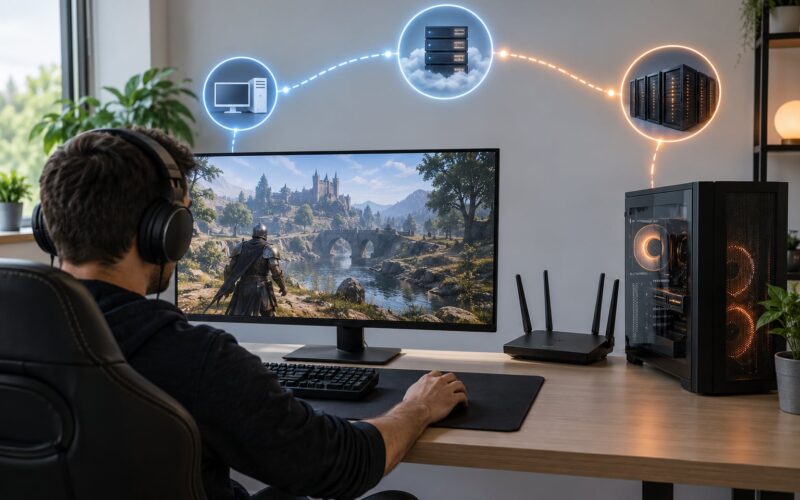
Your client does not render the present. It draws an interpolated world built from the last two snapshots it received, which means everyone you see is displayed somewhere between one and two round-trip times behind their actual input. Your own character moves instantly on your screen, because the game predicts your movement locally and corrects it later.
Take a concrete example. You are on a 60ms connection, so your client is showing enemies about 90ms behind (roughly your half-round-trip plus a small interpolation buffer). You leave cover, cross an open lane, and get back behind the wall. On your screen that whole sequence took about half a second.
An opponent on 200ms sees the same sequence 170ms later than you do, and their fire command reaches the server after that. If they fired while your position was still in the open on their delayed timeline, the server checks the shot against the rewound world at that earlier moment and registers a hit on a target that was, by your clock, safely behind concrete.
Two separate things get confused here. Delayed enemy information is when you are seeing an opponent late, which makes their movement feel sluggish and their peeks feel late. Delayed damage is when your own hit takes longer to arrive than you expect, which makes you feel like you died after you should have been safe. They have different fixes and different causes, and packet loss makes both worse without necessarily showing up in your ping number.
Jitter is the quiet one. Average ping can look fine while individual packets arrive 20ms apart instead of evenly spaced, which makes the interpolation buffer constantly over- and under-correcting. A 40ms ping with steady spacing usually feels better than a 25ms ping that spikes every half second.
How Hit Registration Creates Unequal Cover
Hit registration is the process of deciding whether a shot connected and where. Every multiplayer shooter does it in one of two ways.
In a server-authoritative model, the client sends a fire command with a timestamp, and the server is the only thing allowed to decide hits. This is the model most competitive shooters use because it is the only one that resists cheating. In a client-authoritative model, the player who pulled the trigger says what they hit, and the server checks it more loosely. Small, close-range indie shooters still do this because building a full authority model costs money.
Server authority is where server-side rewind lives. To reward the shooter for hitting what they saw, the server keeps a short history of every player’s position. When a fire command arrives, it does not check the hit against the current world. It rewinds the target to the position that matches the shooter’s view at the moment of the shot, tests the hitbox there, and accepts or rejects.
The formula developers use is roughly the fire timestamp, minus the shooter’s interpolation delay, minus half their round-trip time. Which means the server is deliberately validating your shot against a past where you were more exposed than you currently are.
Weapons make it stranger. A hitscan weapon resolves instantly along a line, so what matters is only the rewound position. A projectile weapon travels, so the server needs the position at every point along the path, and it usually interpolates between history samples. A shotgun fires many pellets in a spread pattern, so a late-arriving command can place a whole cone of pellets on a stale silhouette. That is the “I was fully behind the wall” report in its purest form.
Some games also apply client-side hit registration for local feedback, so your crosshair flashes and your damage number appears the instant you fire. If the server later disagrees, you get a shot that looks like a hit but is not one. That mismatch, not the kill, is often what erodes trust in the game.
Why Opponents Can Kill You While You Appear Hidden
Sometimes the enemy genuinely is not looking at you, and they kill you anyway. These are the reasons that happens when nothing is broken.
They pre-aimed your shoulder. The top of most cover hides everything except the strip of body you present at your usual peek height. Hold that angle on a player who always uses it, and the shot is already aimed before anything comes into view.
They tracked you into cover. An opponent can follow your movement on their screen until your model disappears behind the barrier, then keep the crosshair exactly where you were last visible and fire. If your transition to cover is slow, that last visible spot is close enough to hit you through the wall in shooters where penetration is possible, or close enough that rewind still finds you near the edge.
They shot at where you left. You moved from A to B. They fired at A. If your hitbox at A was within the rewind window of their shot, you take damage at a position you abandoned several hundred milliseconds earlier. The kill feed shows the damage, not the location.
They were shooting at the cover itself. Players lose rounds to enemies who are deliberately suppressing a corner. The bullets land on the wall, and if you are on the wrong side of a thin surface, or if the game counts near-misses as hits under specific rules, some of them register.
The honest version of this: from the opponent’s screen, the game was fair. Their timeline and the server’s timeline agreed. The mismatch was between their view and yours, which is a different problem from cheating and has a different solution.
How to Stop Dying Behind Cover in Shooters
Most of this is habit work, not hardware.
Stop fully inside cover. Do not stop with your model hidden and assume you are safe. Stop with your hitbox hidden. The gap between those two states is the entire problem, and in cover-to-cover movement it is usually one step further than feels necessary.
Change your peek side and height. If you always lean right at standing height, lean left, or go low, or peek higher. This is the single most effective habit change against pre-aim, and it costs nothing.
Break your timing. Vary the gap between your peek and your shot. An opponent holding an angle with a pre-aimed crosshair depends on your rhythm existing at all.
Clear your previous position. If an enemy was firing at the spot you just left, that spot stays dangerous for a moment. Break line of sight, then move again, rather than parking in the new spot where they will find you next.
Read what the cover is made of. Know which surfaces stop rounds and which only stop the enemy from seeing you. Grenades, explosive shells, and shooting-through materials ignore the visual edge entirely.
Lower your network delay where you can. Wired Ethernet beats Wi-Fi for the reason that matters here: it removes jitter, not just latency. Pick the closest server region your game offers, and if a game has a packet-buffering setting, raise it a notch so the client has more room to smooth out variable arrival times.
On the network side, a developer writing on r/GameDevelopment summed up the part everyone misreads: “128 tick rate does nothing if the server still allows to rollback more than 200 milliseconds. Good games roll back no more than 1 frame/tick.” Higher tick rates shorten the gap between simulation steps, but a generous rewind window can undo that benefit entirely.
Expect worse in crossplay. When a 250ms player and a 20ms player share a match, the rewind window has to cover the worst case, which widens the window for everyone. Players report it consistently, and it is a design consequence rather than a fixable bug.
How to Test Whether a Death Was Fair
Before you decide it was netcode or misplay, run this check. It takes about thirty seconds per death.
Step 1: Watch the death indicator. Where the damage arc or hit marker pointed tells you the origin. If it came from an angle you were not covering, your positioning was the issue regardless of the network.
Step 2: Look at the deathcam, then ignore its framing. Deathcams in lag-compensated shooters show the shot from the opponent’s view, not the server’s rewound view. The enemy appears to be shooting a wall because that is where your hitbox used to be. Note the timestamp gap between when they started firing and when you reached cover.
Step 3: Check your own stats immediately after. Ping spikes, packet loss percentage, and tick rate in the scoreboard right after a suspicious death are more informative than the same numbers in the menu. A death at 180ms after a 40ms round tells you a lot more than an average of 40ms.
Step 4: Ask whether the position was guessable. If you have died at the same corner three rounds running from the same height, the answer is pre-aim, not network. Fix the pattern.
If you have kill replays or a review tool available, use them the way players on r/thefinals do, with a screenshot showing the distance past the wall where the hit registered. Those screenshots are the evidence the community actually trusts, more than a ping screenshot.
Which Shooter Mechanics Change the Problem?
How visible the problem is depends heavily on what kind of shooter you are in.
Tactical shooters like CS2 and Valorant lean on hitboxes and pre-aim the most, so peek discipline matters more than network quality. Deaths behind cover usually trace back to a repeated peek pattern.
Battle royales and third-person shooters like Fortnite, Apex Legends, and The Finals add sprint momentum, ragdolls, and camera angles. Players on r/thefinals report post-death momentum carrying bodies into cover, which makes the death look like the wall failed when the wall was never involved.
Extraction shooters like Escape from Tarkov combine long sightlines with high damage, so any delay is fatal. Players describe it as happening every few raids, which is consistent with a problem that only shows up when a specific timing pattern lines up.
Older browser and arcade shooters often use client-authoritative hit registration or peer-to-peer hosting, where the host’s own connection decides everyone’s hits. In those games a bad host produces deaths behind cover that no amount of your own connection improvement will fix.
Tick rate affects the baseline delay in all of them:
| Server tick rate | Gap between simulation steps | What it means for you |
|---|---|---|
| 30 Hz | about 33ms | Position changes are resolved in coarse chunks, so transitions into cover look abrupt |
| 60 Hz | about 17ms | Common baseline for console shooters |
| 64 Hz | about 16ms | Standard for CS2 matchmaking servers |
| 128 Hz | about 8ms | Halves the simulation gap, but only helps if the rewind window is also tight |
You will still find players blaming the tick rate for everything. A thread on r/LowSodiumBattlefield calls it “a combination of low server tick rate and horrible netcode meshed in with excessive lag comp,” which is a fair description of a death but not a diagnosis you can act on.
Frequently Asked Questions
Why do I die behind cover if the enemy cannot see me?
Because the game validates shots against the past, not the present. Most competitive shooters use server-side rewind: when your fire command reaches the server, it rewinds other players to the position they appeared in on your screen when you fired. The opponent then fires at a spot where you were still visible, and the server accepts that shot as a hit even though your client has already drawn you behind cover. Your connection being fine does not change this.
Is there an invisible hitbox behind cover in shooters?
There is no hitbox floating behind walls, but player hitboxes are larger than character models. A standing character is usually built from a body capsule plus separate head and shoulder boxes, and those boxes extend slightly past the visible outline. Peeking around a corner exposes the shoulder or head box before the model itself appears, which is why a shot can land on an empty-looking corner.
Can network lag make it look like I died behind cover?
Yes, and it is the most common network explanation. Your client renders an interpolated world roughly one round-trip time in the past, so opponents appear to move late and your own hit takes longer to arrive than you expect. A shot fired while you were still in the open can register after you have reached cover. Jitter and packet loss make this worse even when your average ping number looks healthy.
How do I stop opponents from predicting my cover position?
Change the things they can predict. Lean the opposite side, peek at a different height, crouch instead of standing, and vary the timing between your peek and your shot. The strongest pre-aim is aimed at a repeated habit, so even two changes to your usual routine remove most of the free hits an opponent was getting. If you die at the same corner repeatedly, that pattern is the problem, not the network.
Why does the game show a hit behind a wall?
Usually because of lag compensation combined with penetration rules. The server rewound your position to the moment the shooter fired, which may have been before you were fully behind the wall, and it then ran the bullet against that earlier position. If the surface is thin or marked as shootable, it also allows rounds through. A deathcam showing an enemy firing at a wall is the expected view in that situation.
Is crouching behind cover always safer than standing?
Crouching lowers your hitbox, which reduces the surface an opponent can hit and often clears it behind low walls. It is not automatically safer, though. Crouching also slows your peek and can leave your head exposed behind waist-high cover if the enemy is on higher ground. The safer rule is to clear your whole hitbox behind the surface, and to crouch when it helps you clear it faster.
Conclusion: Make Your Cover Position Safer
Check two things first when you die behind cover in shooters: was your entire hitbox inside the surface, and was there a shot already on its way or a shot aimed at where you always appear. Clear the hitbox fully, move somewhere you have not been shot from recently, and change which side and which height you peek from.
None of that fixes lag compensation, because that system exists to reward the shooter. It just stops you from being the easiest target in a match where everyone is guessing.