To figure out how to pick a main character in a fighting game, shortlist three candidates, learn the basics of each, then play about ten real matches with every one of them and score the results on feel, difficulty and the matchups you actually face. Commit to the highest scorer and give it 30 to 50 hours before you judge it. The whole process takes about a week of short sessions.
A main is the character you invest the most practice time in. Your combos, your matchup knowledge, and your default pick when a match has to be decided quickly all live on that one character. Everything else on the roster is a secondary you know at a basic level, or a lab character you bring out once a month.
That definition matters because the cost of picking badly is not one bad season. Combos, neutral decisions and matchup notes all have to be rebuilt from zero when you switch, and most players who quit a fighter do it right after a main pick went wrong. Choosing well is a week of work that saves months.
Table of Contents
- 1How to Pick a Main Character in a Fighting Game: Step by Step
- 21. How to pick a main character in a fighting game: set your priorities first
- 32. Make a shortlist of two or three candidates
- 43. Test movement, attacks and special moves
- 54. Check the matchups against characters you dislike
- 65. Estimate the learning curve and the practice time
- 76. Make the commitment, and keep a secondary
- 8Common Mistakes
- 9Frequently Asked Questions
- 10What is the easiest way to pick a main character in a fighting game?
- 11Should I choose the strongest character on the tier list?
- 12Can I have more than one main character in a fighting game?
- 13How do I know when I should switch my main character?
- 14Is it better to learn a difficult character or an easy one?
- 15Conclusion
How to Pick a Main Character in a Fighting Game: Step by Step
Six steps, in this order. Do not skip ahead to the last one, because the last one only means something if the earlier five were honest.
1. How to pick a main character in a fighting game: set your priorities first
Decide what you are actually playing for before you look at the roster: winning online matches, learning the fundamentals, playing well with friends on the couch, or enjoying a character for a hundred hours. One clear priority makes the decision easy. Two workable priorities is fine. Four is why you are still reading a guide instead of pressing buttons.
Most people skip this step and pick a character by vibe, then wonder why practice feels like a chore. Pick the playstyle you enjoy watching yourself do, and only then look for characters inside it.
| Archetype | How you win | Key tools | Difficulty | Who it suits |
|---|---|---|---|---|
| Rushdown | Constant close pressure, fast blockstrings, corner pressure | Fast normals, low damage, cancels, teleports or fast specials | High | Players who like pressure and enjoy long execution chains |
| Zoner | Control space from full screen and punish approaches | Projectiles, fireballs, charge partition, long-range normals | Medium to high | Patient players who like spacing and risk management |
| Grappler | Close the gap and take a big chunk of health | Command grabs, throws, armoured moves, command throws | Medium | Players who like reacting to the opponent instead of guessing |
| All-rounder | Win with fundamentals: spacing, pokes, a simple mixup | Fireball, uppercut, reliable pokes, decent coverage | Low to medium | New players who want to learn spacing and matchup basics |
| Projectile and mixup | Force the opponent to guess between poke, throw and low | Fireballs, overheads, lows, shimmy behaviour | Medium | Players who enjoy reading habits and trapping the opponent |
If you genuinely cannot name your priority, the archetype answer is usually all-rounder. It teaches the parts of the game every other character assumes you already know.
2. Make a shortlist of two or three candidates
Kill characters that fight your priorities. A character with heavy motion inputs and five-frame minimum gaps is the wrong call if you want something you can pick up in an evening. A character with no reliable button normals is the wrong call if your goal is online play with other beginners.
Use tier lists as a filter, never as the decision. They tell you about current competitive balance and nothing at all about whether you will still want to press their buttons in three months.
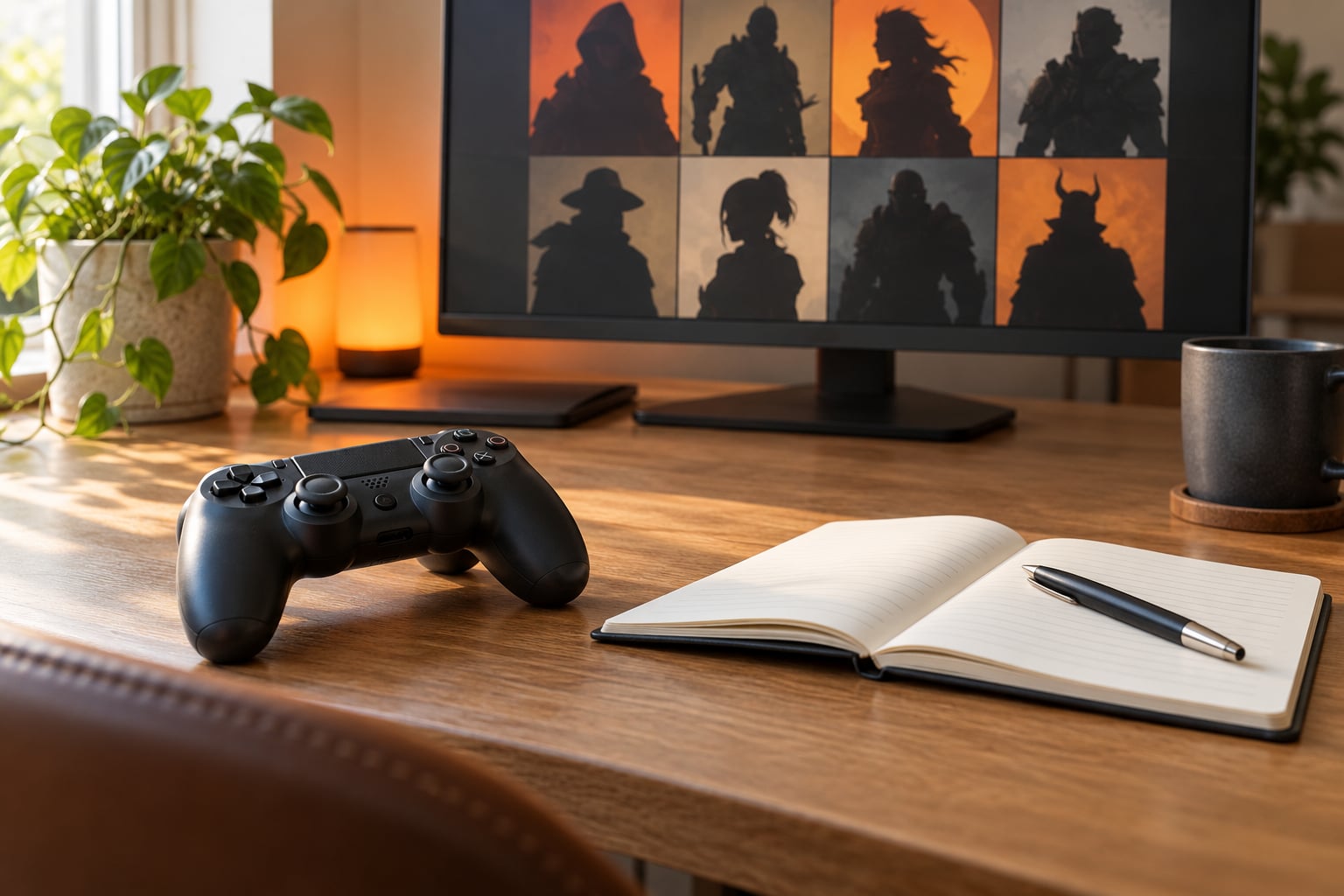
Watch two or three matches of each candidate before you commit a minute of practice time. Seeing a rushdown player’s neutral play side by side with a zoner’s tells you more in ten minutes of video than an hour of reading written descriptions.
3. Test movement, attacks and special moves
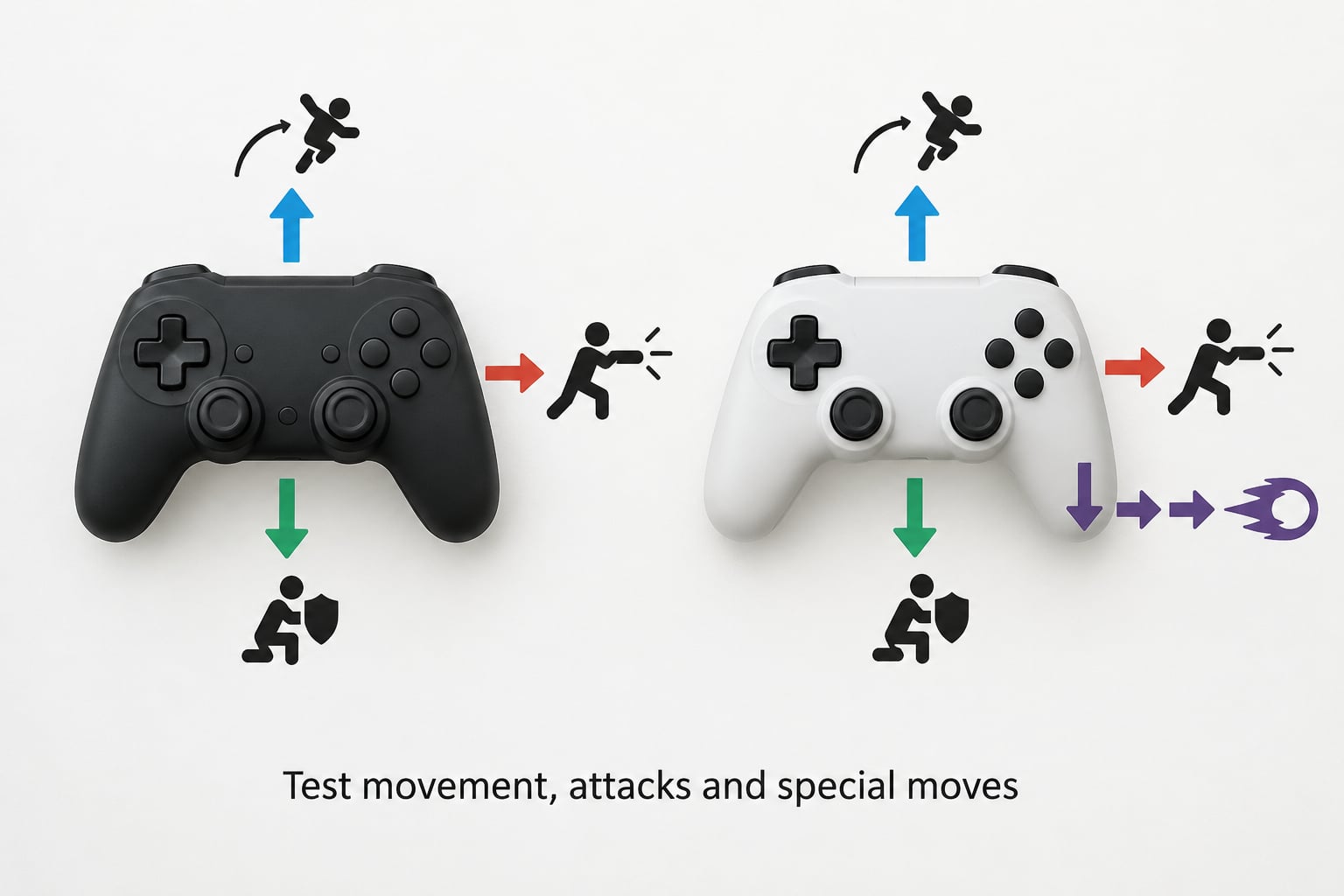
This is the step that separates a real answer from a guess. Spend a session in training mode with each shortlisted character and write down four things.
- Movement. Walk speed, dash distance and jump arc. Some characters outrun others on the ground, and jump arcs change which jumps reach over an opponent’s high attack.
- Attacks. Find your fastest normal that is still safe on block, and note which ones whiff. If most of your buttons get punished from range, you picked a character whose neutral you will not enjoy.
- Defence. Try blocking every hit on block, then throwing. A character with strong throws may suit you better than one you have to learn spacing with.
- Specials. Can you input a quarter circle or a charge motion without looking at the stick? If not, that character has a real learning tax, and it is a tax you will pay in every match until it becomes automatic.
Then do a combo. Get one reliable route, damage or corner carry included, and note how many attempts it took. Ten attempts for a five-hit route is normal. Forty means the execution demand is higher than you probably want right now.
4. Check the matchups against characters you dislike
Pick the three opponents in the game you look forward to least and record what beats you. Each one usually has one honest answer: a character with strong anti-airs shuts down a jump-heavy rushdown, a grappler eats a zoner who cannot find an approach, and a fireball-based all-rounder is comfortable against a lot of slow starters.
A low-tier main is not a bad bet if you can answer the characters you hate. Matchup knowledge travels with you between games, and a character with one clear weakness you understand beats a top-tier character with five you do not.
Ten real matches per candidate, with a note after each one, tells you more than two hours in practice mode. Write down what worked and what got hit, then look for the pattern across ten games rather than one.
5. Estimate the learning curve and the practice time
Realistically, most characters need somewhere around 30 to 50 hours before they stop feeling awkward, and that is with regular practice. Low-complexity characters land nearer the bottom of that range, technical characters near the top. If your schedule gives you two hours a week, plan on the harder end taking months and that is fine.
Build the estimate from what step 3 showed you: how many special moves, how demanding the motion inputs are, how long the combo routes are, and how much of the gameplan depends on resources you have to bank. A character with a super meter mechanic adds a second decision to every exchange.
A workable session is 20 minutes on the combo route, 20 minutes on one matchup, 20 minutes on five matches. Keep a small spreadsheet with the two or three lines you keep dropping; that list shrinks faster than anything else you can practise.
6. Make the commitment, and keep a secondary
Pick the candidate you scored highest and where you still want to press buttons after an hour. Enthusiasm is a real selection criterion, not a soft one. A character you enjoy for fifty hours beats an optimal character you abandon in ten, and it is not close.
Keep one or two secondaries at a basic level so you have an answer when your main has a bad matchup, and so your understanding of neutral keeps expanding. Community roster threads on this exact question generally land on roughly three quarters of a roster being comfortable, which is more than enough.
Set a review point. After 30 to 50 hours, or after your first tournament, or after a month of online losses, look at the character again with clearer eyes. That is a review, not a slow drift into a new main.
Common Mistakes
- Picking the strongest character and nothing else. Tier lists change every few months and know nothing about your hands. Fix: filter by tier, then choose on playstyle.
- Copying the pro you watch. Their character suits their execution level, their setup and their matchup experience. Fix: copy the archetype, not the character.
- Picking on looks and never testing. A character you like the look of is a perfectly good starting point and a terrible final answer. Fix: run step 3 before you commit.
- Ignoring matchups entirely. Some characters lose to half the roster for a specific reason. Fix: record what beats you in ten matches and decide whether you can live with the answer.
- Switching mains every bad week. Every switch resets your combos and matchup notes, so you never get past the awkward stage. Fix: give a character the 30 to 50 hour trial before judging it, and treat a switch as a scheduled decision.
- Choosing only for combos. Flashy routes that cannot be used from neutral will not win you rounds. Fix: test the pressure situation, not the combo video.
- Going straight into ranked before you can block and punish. You will read every loss as the character’s fault. Fix: learn blocking, throwing and one punish in training mode first, and pick a character with forgiving buttons while you do.
Beginners often worry that an easy character will stop them learning spacing, which is a fair concern; the answer is to pick something easy to press but not so safe in neutral that nothing is asked of you. That middle ground is usually an all-rounder with one honest weakness, not a character whose entire toolkit is safe on block.
And if you have already cycled through most of the roster and nothing clicks, that is the most common version of this problem and it has its own answer: pick an archetype instead of a character, pick the least-wrong candidate inside it, and give it the full trial before deciding.
Frequently Asked Questions
What is the easiest way to pick a main character in a fighting game?
Shortlist three characters inside one archetype you enjoy, then run the same test on each: ten training matches, ten real matches, and a score for feel, difficulty and matchups. Comparing candidates on an identical test is easier than searching for a perfect answer. The character you want to press buttons in after an hour usually wins, and it takes about a week.
Should I choose the strongest character on the tier list?
No, not on its own. A tier list ranks competitive results, which tells you very little about whether you will enjoy playing the character or whether you can execute it. Use it only to rule characters out, then decide on playstyle and matchups. Plenty of strong players main characters well below the top of the list.
Can I have more than one main character in a fighting game?
Yes, most players do. One character gets the serious practice time and becomes your default, while one or two secondaries stay functional enough to cover a bad matchup. What hurts is spreading that practice across eight characters so none of them passes the awkward stage. One main plus two backups is the workable arrangement.
How do I know when I should switch my main character?
Switch when a scheduled review tells you to: after 30 to 50 hours, after a tournament, or after a month of losing that is not explained by fundamentals. Do not switch because of one bad week, because the character is not top of the list, or because someone better is playing them. A switch costs you your combos and matchup notes, so it should be a decision, not a reflex.
Is it better to learn a difficult character or an easy one?
Start easy if your schedule is short or you want to reach online play quickly, and choose something easy to press that still asks you to learn spacing. Start difficult if you enjoy execution and can give it a few months. The character you abandon in ten hours teaches you less than a moderate one you keep for a hundred, whichever end of the difficulty scale it sits on.
Conclusion
Pick an archetype, shortlist three characters inside it, and run the identical trial on each: training basics, ten real matches, a short score. Start tomorrow with two finalists rather than the whole roster, give each one a focused session, and compare how each one feels after the same amount of practice.
If one of them is still the character you want to play in an hour, that is your main, and the review point at 30 to 50 hours will tell you whether it was right.