Anti-cheat causes false bans because it does not look for players, it looks for patterns. Signature and heuristic systems flag anything that resembles known cheat code, which means a legitimate overlay, a graphics driver, a macro tool or a cheat left running in the background for a different game can trip the same detector that catches aimbots, and you never get told which one it was.
Updated for 2026.
Table of Contents
- 1What Is an Anti-Cheat False Ban?
- 2How Does Anti-Cheat Detection Work?
- 3Signature-based detection matches known cheat code
- 4Heuristic and behavioural detection watches patterns
- 5Server-side analysis reads the match, not the PC
- 6Kernel-level drivers read the whole machine
- 7Why Anti-Cheat Causes False Bans
- 81. Heuristic detection punishes unusual setups
- 92. Third-party software the anti-cheat has never seen
- 103. A cheat running in the background for another game
- 114. Drivers and system files that collide with a signature
- 125. A detection-logic bug shipped in a live anti-cheat update
- 136. Kernel-level scanning reaching software you forgot about
- 147. Shared computers, family PCs and LAN parties
- 158. Cloud gaming, virtual machines and capture cards
- 169. Delayed enforcement and ban waves
- 17Common Signs That Your Ban May Be Wrong
- 18How to Appeal a False Anti-Cheat Ban
- 19How to Reduce the Risk of a Future False Ban
- 20Frequently Asked Questions
- 21Can antivirus software cause an anti-cheat false ban?
- 22How long does an anti-cheat ban appeal usually take?
- 23Can using a VPN lead to a false anti-cheat ban?
- 24Why was I banned from a game I did not cheat in?
- 25Should I keep playing after an anti-cheat ban?
- 26Can one anti-cheat system ban several games at once?
- 27In Short
What Is an Anti-Cheat False Ban?
An anti-cheat false positive is a ban issued after detection logic flags software or behaviour that resembles cheating but is not. No player got an unfair advantage, the system simply could not tell the difference.
There are two very different things people call a false ban, and confusing them wastes weeks. A temporary suspension is usually 24 hours to a few days, applied when a system flags you and a human reviewer later finds nothing. An account or hardware ban is much harder: it follows the account, and a hardware ban follows the machine’s identifiers, so a fresh Windows install on the same PC will not clear it.
Community consensus across the Riot and Rainbow Six threads is that a small share of bans are genuinely false, yet the appeal route is the only realistic remedy. Nobody gets an automatic rollback unless the developer publicly admits a bug, which is why most of this guide is about building a case you can defend.
How Does Anti-Cheat Detection Work?
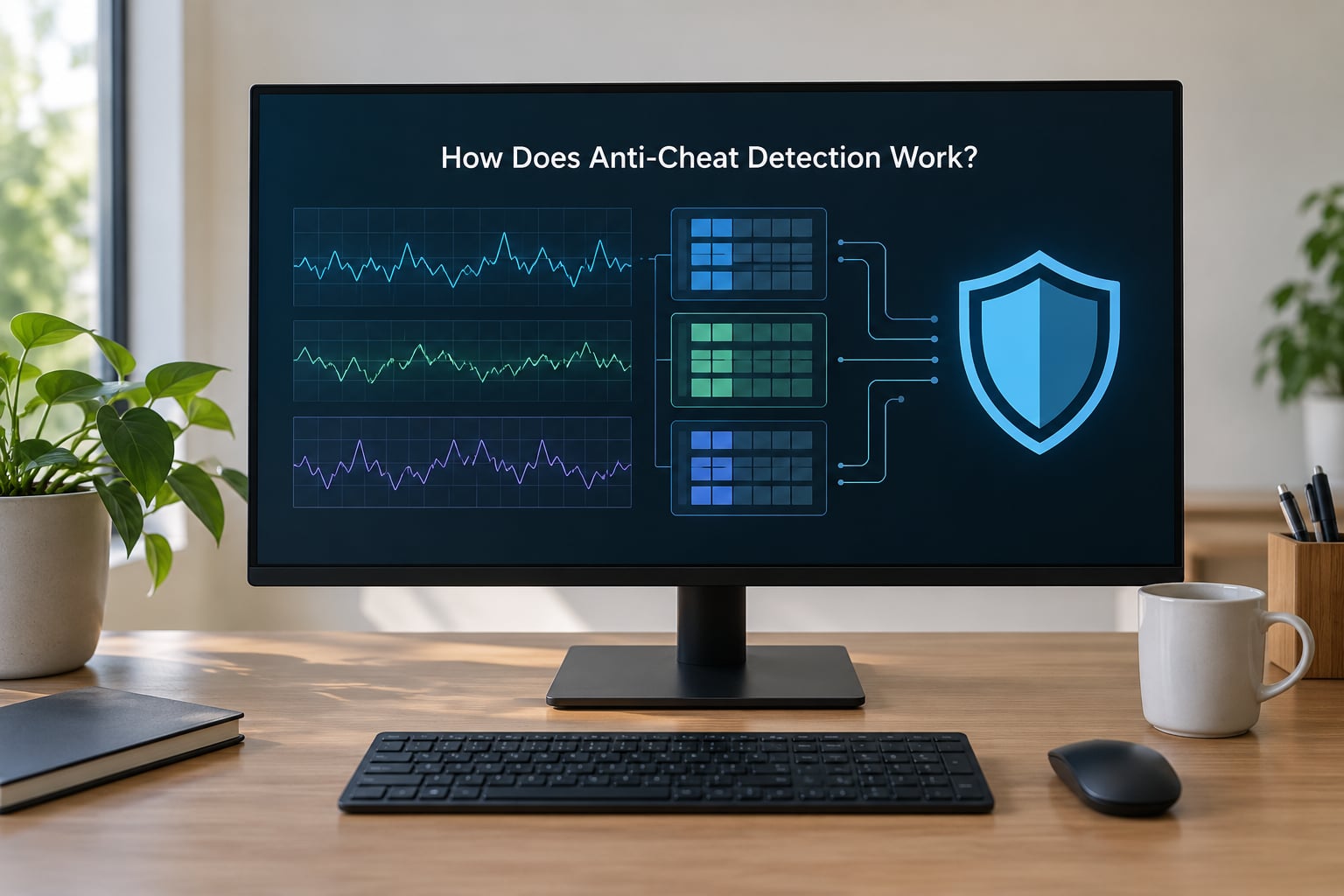
Most people picture anti-cheat as a single program that watches you play. It is really four or five layers, and each layer produces a different kind of mistake.
Signature-based detection matches known cheat code
This is the oldest and most precise method. The anti-cheat holds hashes and byte patterns for known cheat binaries, injectors and scripts, and it blocks or reports anything that matches. When it works it is clean and fast. When it fails, it is usually because the signature collided with a legitimate program, or because a repackaged cheat uses a new hash and slips past entirely.
Heuristic and behavioural detection watches patterns
Signature matching cannot see a cheat nobody has catalogued, so systems also watch behaviour: aim that lands with implausible consistency, inputs timed at inhuman intervals, memory being read by a process that has no business reading it, or requests for data a normal client never asks for. Heuristics are why novel cheats get caught, and they are also the main source of false positives, because unusual-but-legal setups produce the same shape as cheating.
Server-side analysis reads the match, not the PC
The server sees everything that happened in the round, which is why some bans come with no warning during play. Movement, damage output, information that was never visible to the player. This layer produces fewer false positives than scanning, but it produces the ones that are hardest to argue, because you are never told which part of your play was flagged.
Kernel-level drivers read the whole machine
Riot Vanguard and FACEIT load a privileged driver that starts with Windows, not just with the game. That access is the reason they can catch drivers that load before anything else. The cost is scope: whatever runs on your machine is in range, which is exactly why a kernel-level false positive can trace back to a background utility you installed months ago.
| Anti-cheat type | Examples | What it can inspect | Typical false-positive source |
|---|---|---|---|
| Kernel-level driver | Riot Vanguard, FACEIT | Full system, memory and drivers from boot | Background utility, macro tool, modified OS build |
| User-mode anti-cheat | Easy Anti-Cheat, BattlEye | The running game process only | Overlay injected into the game, driver signature collision |
| Lightweight scanner | Valve Anti-Cheat (VAC) | Game files and process, mostly on demand | Modified game files, hash collision with a driver |
| Server-side review | Ricochet, in-house systems | Match data and reports | Unusual but legal play patterns, spoofed reports |
Why Anti-Cheat Causes False Bans
1. Heuristic detection punishes unusual setups
A heuristic fires on shape, not identity. Raw mouse input, a modified Windows install, an unusual DPI setting, a controller with remappable paddles. None of these are cheating, and all of them look different from the population average the model was tuned on. This is the single largest bucket of anti-cheat false bans.
2. Third-party software the anti-cheat has never seen
Macro recorders, RGB control panels, video capture tools, translation overlays, input latency displays. Players on the Overwatch and r/overwatch2 boards kept asking each other to find a common software denominator, which is the clearest sign that nobody is told what triggered the ban. The r/riotgames breakdown makes the same point: cheats for other games, data trackers and debloating utilities all get flagged.
3. A cheat running in the background for another game
This one catches people who have never touched the game they were banned from. A player installs a cheat for a different title, leaves it loaded, opens a competitive game, and the anti-cheat finds cheat code attached to a process that has no business containing it. It is still cheat code on the machine, and the anti-cheat cannot tell intent from residue.
4. Drivers and system files that collide with a signature
Graphics drivers update constantly and ship code that overlaps with what cheat memory readers do. Threads on the EA forums a few years back reported AMD drivers appearing to trigger VAC bans, and similar reports follow every major driver release. The same thing happens with a Windows update that ships a new system component.
5. A detection-logic bug shipped in a live anti-cheat update
The clearest documented case is PUBG in March 2018, when a routine BattlEye update carried a detection logic bug and handed legitimate PC players two-day suspensions. Newsweek covered it at the time; PUBG confirmed the bug and shipped a fix. Ricochet drew the same shape in October 2024, when Call of Duty players were banned in bulk and Activision restored the affected accounts.
6. Kernel-level scanning reaching software you forgot about
A driver with boot-time access is looking at everything, including utilities that have been installed for years. A resetera thread on a Vanguard update produced exactly this pattern: many accounts banned at once, all with software in common, none of it malicious.
7. Shared computers, family PCs and LAN parties
One person installs something, everyone else gets flagged. A household machine, a school lab PC or a shared console means your anti-cheat false positive may have nothing to do with anything you did. This is the version of the problem that is hardest to prove, because you cannot inspect someone else’s machine.
8. Cloud gaming, virtual machines and capture cards
Remote and virtualized environments look different from bare metal. Some are unsupported outright, which means the client is running in a degraded mode and detection quality drops in both directions. Capture cards add an extra layer of memory-mapped video buffers that a scan can mistake for an injected process.
9. Delayed enforcement and ban waves
Bans are often not issued the moment something is detected. Developers deliberately delay enforcement so cheaters cannot binary-search the detection by testing changes, which means an old action, an old driver or an old piece of software can surface as a ban weeks later. The mass bans on the EA Apex Legends boards last month followed this pattern.
Common Signs That Your Ban May Be Wrong
Check these before you write the appeal. Each one is a signal, not proof.
- The ban landed within days of installing a utility, overlay or driver update.
- The same ban reason appeared more than once, in the same wording, across separate sessions.
- You share the PC with someone else, or you played on a family, school or LAN machine.
- The evidence you were shown does not describe anything you did, or points to a file you have never opened.
- Other players on the same patch and platform were banned in the same window.
- You played on cloud, virtualized or remote hardware, or the ban followed a Windows or driver update.
- You keep cheats for other games installed and occasionally leave them running.
- The account you were banned on is an old one you barely use, rather than the one you play.
One note on framing. In the Siege Steam discussion, players who had modified game files or downloaded third-party tools found no sympathy, while players with clean records and a clear timeline did. Checking your own machine honestly first is the difference between an appeal that reads as a misunderstanding and one that reads as a cover story.
How to Appeal a False Anti-Cheat Ban
Appeals are slow, and the fastest route is the official one. Players report across the r/FortniteBR and r/riotgames threads that posting publicly first makes the case harder, because support tends to treat a public thread as noise. Keep the argument in the ticket.
- Identify the game and the anti-cheat. Valorant runs Vanguard, Apex and many PC titles use Easy Anti-Cheat, Rainbow Six uses BattlEye, Counter-Strike uses VAC. Different vendors mean different appeal portals, and Riot handles Vanguard cases separately from ordinary account issues.
- Preserve evidence before you reinstall anything. Screenshots of the ban message, the date and time, your Windows build, your GPU driver version, and a list of every program in your startup folder. A fresh install destroys the state that supports your claim.
- Find the honest trigger. Walk your startup apps, task manager and installed programs. Remove the overlay, the macro tool and the unused utility. If a cheat for another game is installed, remove it too and say so plainly in the ticket.
- Write it in three short parts. What happened, in dates and times. What you found on your machine. What you changed. Keep it under 300 words and skip adjectives.
- Use the vendor escalation route. If the in-game or in-client appeal returns a template, escalate to the publisher’s support, then to the vendor. A documented Easy Anti-Cheat case on Steam took 40 days to overturn, so expect weeks rather than days and keep the same ticket number throughout.
- Do not resubmit the same text repeatedly. Duplicate tickets get closed for spam. Wait for the response, then answer the specific question in it.
- If a developer admits a bug, follow the restoration notice. When Activision confirmed the Ricochet false bans, affected accounts were restored in bulk. Announced waves are the one case where you do not have to win an appeal on your own.
How to Reduce the Risk of a Future False Ban
None of this guarantees a clean record. It just removes the things that cause the majority of flaggable situations.
- Verify game files before you queue and never run a game from a modified folder.
- Close overlays and background utilities before launching, or add them to the vendor’s ignore list if it has one.
- Keep GPU drivers and chipset drivers current, and avoid updating on the day of an important session.
- Uninstall cheats for other games completely. Leaving a tool installed for a title you are not playing is the most common avoidable flag.
- Keep your operating system stock. Debloated and modified builds remove files that detection logic expects to find.
- Use a separate account per person on a shared machine, and never lend an authenticated account to someone else.
- If you stream, capture on a card rather than in software, and keep the capture tool current.
- Avoid cloud and virtualized machines for competitive titles unless the publisher explicitly supports them.
- Write down what you changed when a problem appears. A dated note about a driver update or a new utility is worth more than a memory of it.
Frequently Asked Questions
Can antivirus software cause an anti-cheat false ban?
It can. Endpoint protection tools inject into processes, hook file access and hold memory the game does not. Some of that behaviour overlaps with what memory-reading cheats do, so a signature or heuristic can catch the antivirus. If your ban followed a security suite install, say so in the appeal with the exact product name and version, and check whether the vendor publishes an ignore list for that title.
How long does an anti-cheat ban appeal usually take?
Expect weeks, not days. A documented Easy Anti-Cheat case on the Steam forums ran 40 days before the ban was overturned, and hardware bans take longer because they require manual review. Keep one ticket number, answer each reply directly, and avoid opening duplicates. Short, dated appeals get resolved faster than long ones because reviewers can act on them without follow-up questions.
Can using a VPN lead to a false anti-cheat ban?
Usually not directly. Anti-cheats care about process behaviour, not your IP address. A VPN does, however, change your apparent location and network path, which matters for hardware bans and for region-locked enforcement. It also hides real network problems such as packet loss that make your play look erratic. If you use one, turn it off before a ranked session and keep it off while appealing.
Why was I banned from a game I did not cheat in?
Because the anti-cheat found cheat-like code on your machine rather than a cheat in your match. Cheats installed for other games, leftover macro tools, overlays and shared PCs all produce the same signal. The ban attaches to the account that was logged in when the scan ran, which is why it feels unrelated. Clear your startup programs and installed software, then appeal with the list of what you removed.
Should I keep playing after an anti-cheat ban?
No, not on a competitive account while the ban is live. Playing while suspended usually escalates the penalty to a permanent ban and can drag a hardware ban across your whole PC, which affects every game using that machine. Use the time to clean the system rather than queueing. If you share hardware, keep it offline from any account linked to the banned one until the appeal closes.
Can one anti-cheat system ban several games at once?
Yes, and this is the part that surprises people most. Vanguard runs across Riot’s whole library, so a Riot-side ban can touch League, Valorant and Team Vitality titles together. Easy Anti-Cheat and BattlEye are third-party products sold to many publishers, so a single detection event can be reported to several of them at once. A hardware-level ban can even follow you to titles from companies with no shared client.
In Short
Anti-cheat causes false bans because detection logic works on resemblance, and resemblance catches innocent software. Start by clearing startup programs, overlays and unused cheats, then appeal through the vendor’s own channel with dates, versions and a short list of what you changed. Reviewed for 2026.