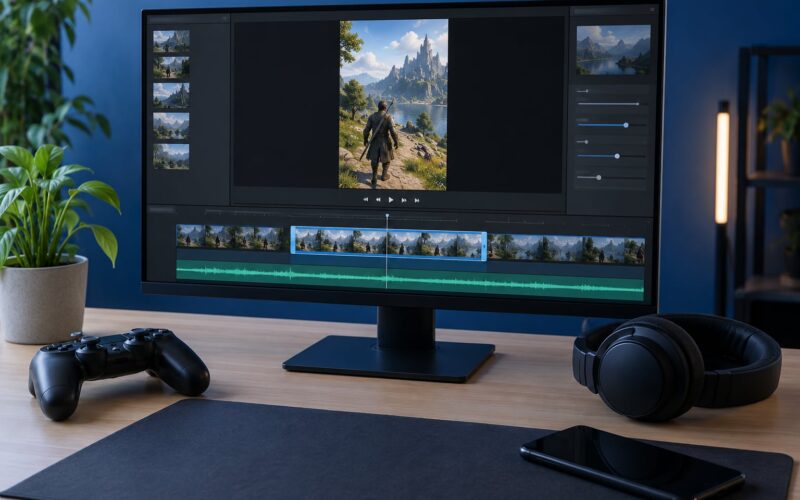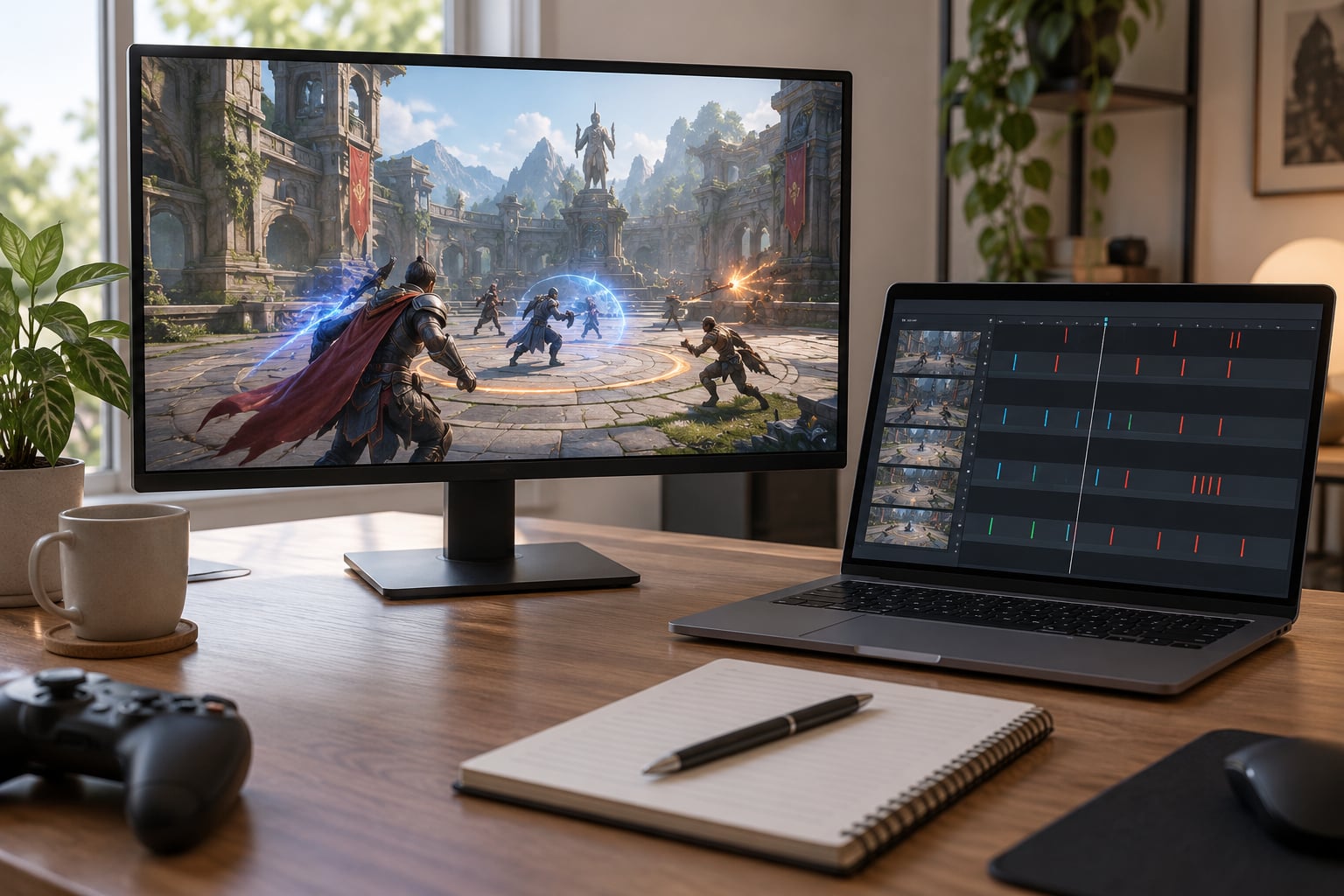
To analyze your own gameplay VODs, watch one full match straight through without pausing, then replay it in segments and log what actually happened at each decision point before you judge it. Write observations separately from conclusions, count how often the same decision shows up across at least three matches, and test one correction in the next two or three games. A full session takes 30 to 45 minutes for a typical ranked match.
The reason most self-review fails isn’t effort. It’s that players watch a replay like a highlight reel, remember the shots they hit, and quietly talk themselves out of every mistake. The workaround is boring and works: label decision points, keep your notes factual, and go looking for repetition rather than for a single bad play.
If you’re just starting out, this guide was updated for 2026 and applies to any game — shooters, MOBAs, battle royales, fighting games.
Table of Contents
- 1What You Need Before You Analyze a VOD
- 2Step-by-Step: How to Analyze Your Own Gameplay VODs in Seven Steps
- 31. Define the Question You Want to Answer
- 42. Watch Once Without Pausing
- 53. Add Timestamps and Separate Observations From Conclusions
- 64. Review Repeated Decisions Instead of Every Mistake
- 75. Check the Game Context Before You Call It a Mistake
- 86. Compare Patterns Across Multiple VODs
- 97. Create and Test One Corrective Action
- 10Common Mistakes That Ruin a Review Session
- 11Review Tips That Make Each Session Useful
- 12Frequently Asked Questions
- 13Do I need other players to analyze my gameplay VODs?
- 14How many gameplay VODs should I review at one time?
- 15What should I analyze first in a shooter VOD?
- 16How can I tell whether a mistake was a bad decision?
- 17How do I turn VOD notes into measurable goals?
- 18Conclusion
What You Need Before You Analyze a VOD
Four things, and none of them cost money.
- A recording you can scrub. Either the game’s built-in replay system or a replay/demo file from your match history. Built-in replays are usually easier to navigate because they come with scoreboard and economy overlays.
- A player with real controls. You want frame-by-frame stepping, speed adjustment down to half speed, and the ability to drop a timestamp bookmark. A free desktop video editor or the in-game replay viewer both work; what matters is that you can move a few seconds at a time without guessing.
- One notes file. A plain text document or a spreadsheet is fine. Don’t use the in-game chat, and don’t try to take notes during the whole match — notes taken live break your attention and you end up with a transcript instead of an analysis.
- The match context written down. Game mode, map, your role, roughly what your team was trying to do, and anything unusual about the matchup. Ten seconds of writing here saves you from an hour of misreading a decision that never had a chance to work.
One optional addition: a second perspective. A friend who plays the same role can watch a single clip with you, and that is often enough to break a blind spot you can’t see alone. Blizzard’s own forum advice leans on a top-down or free-camera view for team movement, which is the same idea — get outside your own eye line.
Step-by-Step: How to Analyze Your Own Gameplay VODs in Seven Steps
1. Define the Question You Want to Answer
“I need to get better” is not a review question, because it gives you nothing to look for. Replace it with one narrow question you can answer yes or no. Common ones: where do my deaths come from, do I lose fights I should have avoided, am I wasting resources, or why do my first two rounds feel sloppy?
Pick one. A single question per session is what keeps the review from turning into a list of everything that annoys you about your play.
2. Watch Once Without Pausing
Run the match at normal speed, start to finish, and resist the urge to pause. This pass gives you an unbiased overview, and it is the step people skip when they get excited about their first death.
Note four things when it ends: the result, the one pattern that dominated the match, how you felt during it, and the two or three moments that jumped out immediately. That first impression is useful because it is what your brain already believes about the game. Later, when your notes contradict it, you’ll know something worth examining happened.
3. Add Timestamps and Separate Observations From Conclusions
Second pass, with pausing. Every time you make a meaningful decision — a fight, a rotation, a resource spend, a death — drop a timestamp and write two lines.
Line one is observation, and it should read like a camera: what you could see on screen at that moment. Line two is your interpretation of why it happened. Keeping them apart is the single most useful habit in this whole process, because it’s what stops you from inventing motives you never had.
A filled example:
- Observation: 12:41 — I push into the open corridor alone. Two teammates are already dead. Ultimate is at 80 percent. I get traded and we lose the objective.
- Conclusion: I rotated without checking teammate status and spent an 80 percent ultimate on a fight we had already lost. Trigger to watch next match: entering a space where the scoreboard is against me.
Players who skip this split tend to write “I played badly at 12:41,” which tells them nothing they can change.
4. Review Repeated Decisions Instead of Every Mistake
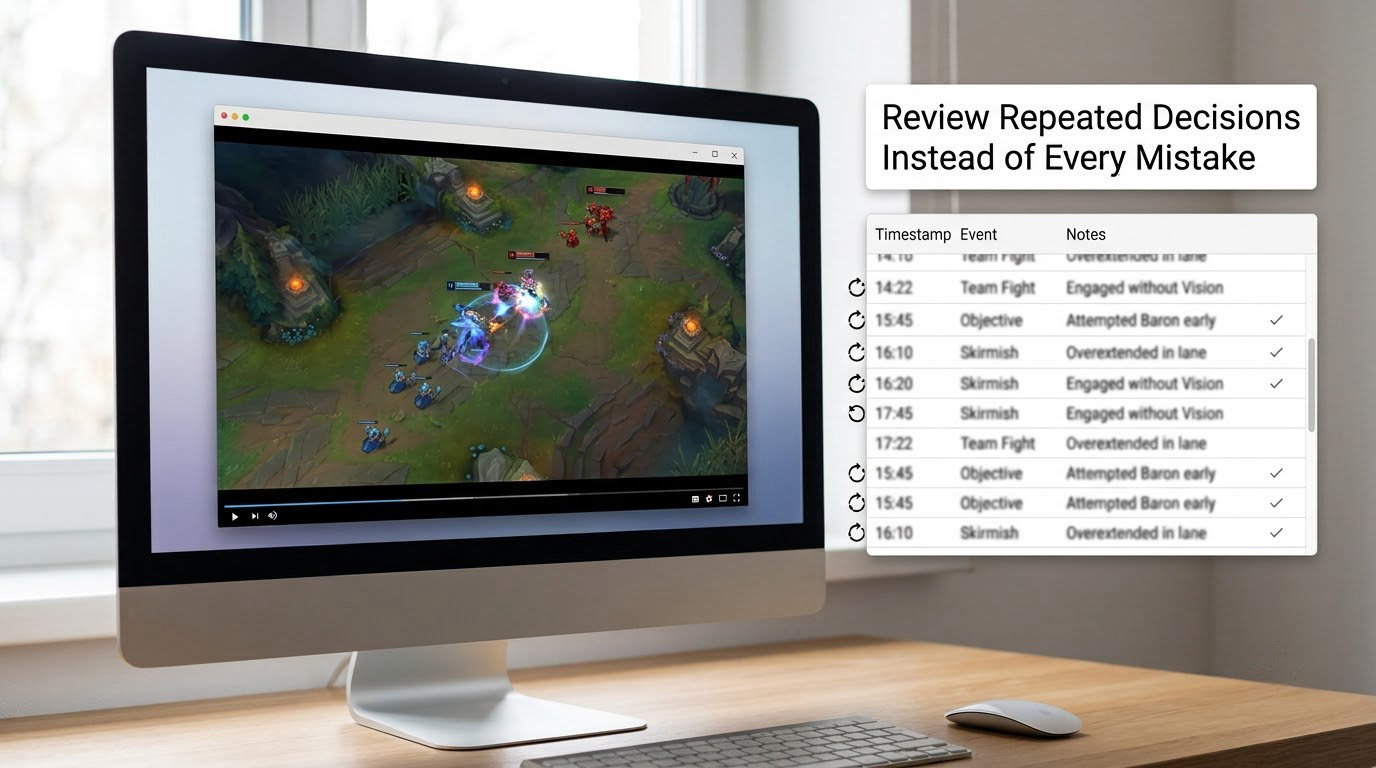
You will not improve by cataloguing every error. A 40-minute match contains dozens of imperfect decisions, and fixing all of them at once fixes none of them. Cluster your timestamps by type instead: positioning, resource use, rotations, target selection, comms.
Then rank the clusters by cost. A habit that happens three times and loses you three rounds outranks a habit that happens nine times and changes nothing. The goal is to find the two or three patterns that account for most of your lost rounds, and to ignore the rest entirely for now.
UpForge’s rank-climbing guide puts it as a leak-removal loop: name the leak, track the leak, remove the leak, one at a time. That framing works because it gives you a finish line instead of an endless list.
5. Check the Game Context Before You Call It a Mistake
Most false conclusions come from judging a decision without the information that was actually available. Before you write anything down as an error, check the map control, your role, your team’s resources, the opponents’ positioning, your cooldown or economy state, and which patch or ruleset the match used.
A rotation that looks wrong from your camera can be right if you heard a call nobody repeated on the scoreboard. An aggressive engage can be correct if you were the only person with the resource to win it. If you cannot reconstruct the context, mark the note as “unknown” instead of filling the gap with a guess.
6. Compare Patterns Across Multiple VODs
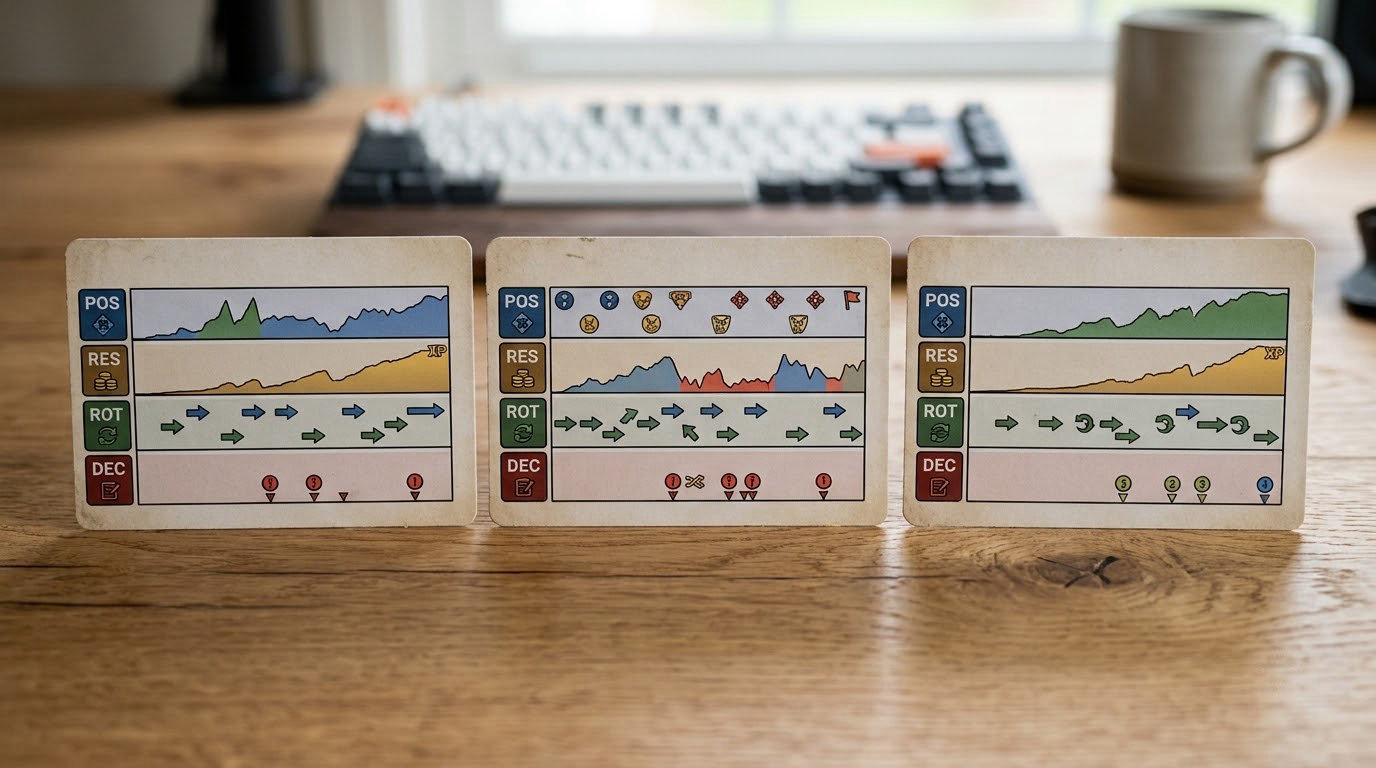
One match shows events. Three matches show patterns. Review at least three recent games with the same question and the same tag categories, then compare the columns.
Use a simple sheet with one row per match and one column per category, so you can count. A pattern that shows up in two of three matches is a lead. Something that shows up in all three is your priority. Something that appeared once is probably noise, and treating it as a habit is how players convince themselves they’ve improved when they haven’t.
Match-to-match variance is real, so don’t promote a pattern on a single data point. Two or three occurrences of the same kind of decision is enough evidence to test a correction.
7. Create and Test One Corrective Action
Turn the strongest pattern into a process change, not an intention. “Position better” is not actionable. “I do not enter a room where two teammates are dead and my ultimate is under 100 percent unless a call confirms the fight” is a rule you can follow or break.
Define success before you queue: in the next two or three matches, zero violations of that rule, or at most one. Then review with the same criteria you used before. Check whether the change actually reduced the pattern, and whether it created a new problem — players who become ultra-passive often stop dying and start losing objectives.
Only after that test passes do you pick the next pattern.
Common Mistakes That Ruin a Review Session
Each of these has a fix:
- Analyzing from memory. Fix: review the recording, don’t reconstruct it. Memory flatters you, reliably.
- Watching only highlights. Fix: review full matches. UpForge’s argument holds — you have to look for the mistakes you got away with in your wins.
- Judging a single round. Fix: one round can be decided by a teammate’s mistake. Look for the third occurrence.
- Reviewing only losses. Fix: one win per session, same checklist. Losses show you consequences; wins show you habits.
- Reviewing after every loss. Fix: review on a schedule, not on emotion. Reviewing while tilted teaches you to hate your own play without improving it.
- Reacting to teammates. Fix: tag those moments as team context and move on. You cannot fix someone else’s round.
- Treating chat as evidence. Fix: use the scoreboard and the visible game state. Chat is an unreliable narrator, including yours.
- Changing five habits at once. Fix: one leak, one correction, one test block.
- Setting goals with no number. Fix: “get better” is not measurable; “zero violations over three matches” is.
Review Tips That Make Each Session Useful
When you only have twenty minutes, use a short routine: one match, one question, ten timestamps, one written conclusion. Narrow beats thorough.
A few habits that compound over time. Write in neutral language — “I entered without a call” rather than “I played like an idiot” — because the second version makes you want to stop reviewing. Keep a fixed set of tag categories so your notes stay comparable across matches. Give each note a confidence rating: confirmed from the recording, probably, or unknown. Clip only the moments tied to your current pattern, and keep those clips where you can find them. Put the review on a schedule, twice a week for example, so it survives a bad night. And once you have a few sessions of notes, compare your worst match against your best and ask what was different — that comparison isolates the variable faster than any single review.
If you want a different angle, the eliteesports.gg film school approach works too: build one simple habit, practise it for three games, then review one decision against it. Same loop, smaller scope.
Frequently Asked Questions
Do I need other players to analyze my gameplay VODs?
No. Most of the process works alone: watch once unpaused, log timestamps, separate observation from conclusion, and compare three matches with the same tags. A second player helps in two situations only — when a blind spot keeps surviving your own review, or when you want a top-down read on team movement that your own camera cannot give you. Even then, ten minutes of a friend watching one clip with you is enough.
How many gameplay VODs should I review at one time?
Review one match at a time, then compare across at least three. A single match produces events, not patterns, and trying to work through a full VOD library in one sitting is the fastest way to quit. One session per match, with the same question and the same tag categories each time, is what makes the comparison meaningful. Ten timestamps from three matches beats fifty from one.
What should I analyze first in a shooter VOD?
Start with your deaths, in chronological order, and ask one question each time: what information did I have before this fight, and was taking it correct given that information? Then move to the fights you won, looking for mistakes you got away with. Position and spacing come first because they produce most avoidable deaths, and because the answer is visible in the recording rather than hidden in your memory.
How can I tell whether a mistake was a bad decision?
Reconstruct the information available at the moment, not the outcome. A fight you lost can still have been the right call, and a fight you won can still have been a mistake you were rescued from. Write what you could see, write what you concluded, then compare against the result — and only judge the decision itself. If you cannot reconstruct the context, mark the note unknown instead of guessing.
How do I turn VOD notes into measurable goals?
Convert your strongest repeated pattern into one written rule with a threshold, then track violations across two or three matches. “Do not enter a room where two teammates are dead unless a call confirms it” can be counted; “position better” cannot. Review the next matches with the identical criteria, check whether the count dropped, and watch for a new problem — like passivity that costs you objectives. Move to the next pattern only after the test passes.
Conclusion
Pick one of your most recent full matches tonight and run the whole loop on it: watch it straight through, then log ten timestamps with observation and conclusion on separate lines. Tag them, count the repeats, and pick the one pattern that cost you the most rounds.
Write one rule with a number attached to it, then test it in the next two or three matches using the same criteria. One correction, verified, beats a page of notes you never test.